In today’s dynamic and competitive business environment, effective management plays a pivotal role in organisational success. Australian managers, in particular, hold a crucial position in driving growth, innovation, and productivity.
Demonstrating Competence and Knowledge: Formal qualifications provide managers with a strong foundation of knowledge and skills in their respective fields. They signify a manager’s competence in core areas such as leadership, strategic planning, financial management, human resources, and more. A formal qualification showcases a manager’s ability to apply theoretical concepts to real-world situations, leading to informed decision-making and effective problem-solving. .
Australia has emerged as a hotspot for entrepreneurship. With a dynamic economy, a supportive ecosystem, and a culture of innovation, Australia offers immense opportunities for aspiring entrepreneurs to turn their ideas into successful ventures.
In this blog post, we will explore the thriving entrepreneurship scene in Australia and highlight key factors that contribute to its growth.
Supportive Government Policies: The Australian government has implemented various initiatives to foster entrepreneurship. Programs like the National Innovation and Science Agenda (NISA) provide funding and support to startups, encourage research and development, and promote collaboration between industry and academia. Additionally, tax incentives and grants are available to help entrepreneurs launch and scale their businesses.
Robust Startup Ecosystem: Australia boasts a vibrant startup ecosystem that provides entrepreneurs with access to funding, mentorship, and networking opportunities. Cities like Sydney, Melbourne, and Brisbane have a high concentration of coworking spaces, incubators, and accelerators that nurture…
The workplace is a space where professionals dedicate a significant portion of their lives. It’s only natural for emotions to arise amidst the pressures and challenges encountered.
This blog post aims to address the question: Is it acceptable to cry in the office? We will explore the dynamics of emotional expression in professional settings and shed light on the evolving attitudes towards this topic.
Embracing Emotional Authenticity: Recognising and accepting emotions as a part of the human experience is crucial. Authenticity in the workplace promotes open communication and a supportive environment. Crying can be a genuine response to stress, frustration, or personal matters, and expressing it appropriately can foster understanding and empathy among colleagues.
Compassionate Work Cultures: Creating a compassionate work culture is essential in understanding and accommodating emotional expression. Progressive organisations recognize the importance of mental health and well-being, encouraging employees to address and manage their emotions…
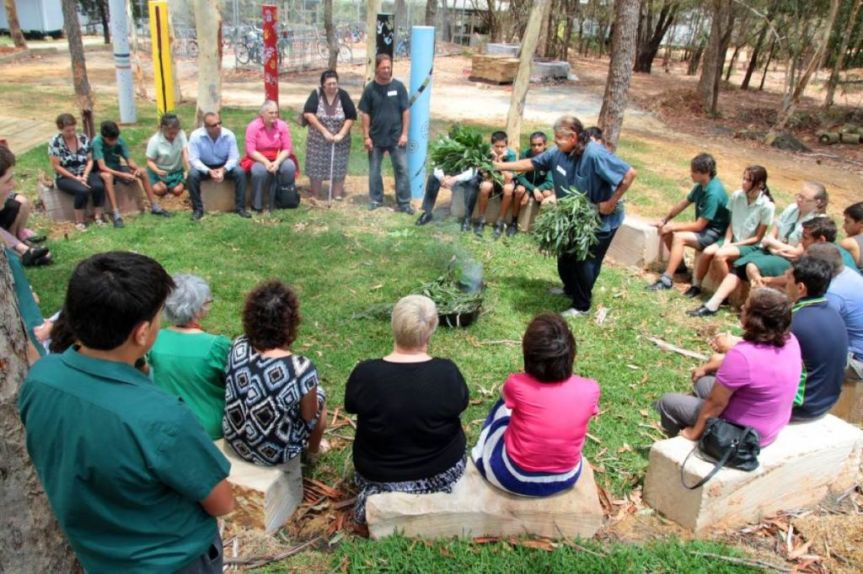
In recent years, Australian businesses have increasingly recognised the value of diversity and inclusion in the workplace. One powerful tool that has gained popularity is the yarning circle, a traditional Aboriginal and Torres Strait Islander practice of communication and decision-making.
In this blog post, we will explore the significance of yarning circles in the context of Australian businesses, highlighting how they promote cultural inclusion, enhance collaboration, and contribute to overall organisational success.
Cultural Inclusion: Yarning circles provide a safe and inclusive space where employees from diverse backgrounds can share their perspectives, experiences, and knowledge. By embracing the principles of active listening, respect, and equality, businesses can create an environment that values and appreciates the contributions of all team members. Yarning circles encourage open dialogue and enable individuals to express their thoughts and ideas freely, fostering a sense of belonging and cultural inclusion within the organisation.
Work Health and Safety (WHS) in Australia refers to the system of laws, regulations, and practices aimed at ensuring the health, safety, and welfare of workers in the workplace. WHS is a crucial aspect of employment in Australia and is regulated at both the federal and state/territory levels.
At the federal level, the primary legislation governing work health and safety is the Work Health and Safety Act 2011. This act establishes a nationally harmonised framework for WHS in Australia. It sets out the general duties of employers, employees, and other duty holders, and provides the legal framework for the management of workplace health and safety risks.
Each state and territory in Australia also has its own WHS legislation that is based on the national framework but may have some variations. These state-specific laws are referred to as the Occupational Health and Safety (OHS) Acts or WHS Acts. For example, in…
Corporate training has become an essential part of every business, regardless of its size or industry. It helps in the development of employees’ skills, boosts productivity, and ensures the overall success of the organisation.
With the advent of technology, virtual corporate training has become increasingly popular. Here are some reasons why virtual corporate training is the future of learning:
Management succession: In today’s market, it is increasingly difficult to find talented individuals who are the right fit for your organisation. It is better business practice to nurture individuals who are already part of the organisation to become your managers of the future.
Flexibility: Virtual corporate training allows employees to learn at their own pace and convenience. They can choose when and where to take the training, which makes it easier for them to balance work and learning.
Cost-effective: Traditional corporate training can be expensive due to travel, accommodation, and venue…
The perils of doing business in China have come into focus again recently, with allegations that staff from the British pharmaceutical giant GlaxoSmithKline paid $500 million in bribes over several years. Four executives from GlaxoSmithKline were arrested in July, while its British-born head of China operations has been prevented from leaving the country. There are … Continue reading Australians face perils by doing business in China
Aboriginal elder Dennis Foley has blasted the federal government's Indigenous Economic Development Strategy, claiming that employing indigenous people in the public sector is not indigenous economic development. The University of Newcastle professor told a national small business forum in Sydney Aboriginal entrepreneurs were the biggest employers of Aborigines and that government needed to move beyond … Continue reading Australian Aboriginals blast indigenous job scheme as “token gesture”
China's state-owned companies may be deterred from investing in Australia because they are being treated unfairly, a Chinese business leader says. Chairman of the China Chamber of Commerce in Australia, Hu Shanjun, said Australia was still a popular place for Chinese groups to invest, but that could change. Mr Hu, who also heads the Bank … Continue reading Chinese companies claim they are ‘treated unfairly’ by Australia
Through the years, I have written quite a lot about trade unions. From an economic point of view, trade unions can operate like monopolists, given their ability to institute collective boycotts against businesses by calling on workers to strike. Were it not for a specific law, such activity would be illegal. To be sure, economists … Continue reading Australian industry groups and unions need oversight
Australia's services sector continued to contract in December even after the central bank lowered interest rates at the start of month, a performance gauge by an industry group published Friday showed. The Australian Industry Group-Commonwealth Bank Performance of Services Index fell 3.9 points in December from a month earlier to 43.2 points--well below the 50-point … Continue reading Australia services sector contracts on consumer caution
THE sharemarket started 2013 with a bang as US lawmakers agreed a budget deal to avoid the worst of the so-called fiscal cliff that had threatened to derail the world's biggest economy. The benchmark S&P/ASX 200 closed up 1.2 per cent at a 19-month high of 4705.9, also after better Chinese manufacturing data helped lift commodity … Continue reading Australian stocks surge to 19-month high as US fiscal cliff averted
Introducing my newest venture, China Daily Mail. I would like to invite all my followers to join me at this site, read the articles, and contribute original and reblogged stories. In recent times, I have been taking an interest in the business activities of some of the companies I trained or had associations with in … Continue reading China Daily Mail – Invitation To Join
The Minister for Broadband, Communications and Digital Economy, Senator Stephen Conroy today announced that the final report from the Panel of Experts on submissions to the National Broadband Network process has been received. The Minister stated that the receipt of this report marks a significant milestone in the NBN process: "The Government is now considering … Continue reading Expert Panel’s Broadband Report (2009)
In recent weeks, I have received several calls from persons claiming to be from my bank. They have told me that I have an account with them that is overdrawn. They have then gone on to instruct me, "for identification purposes," to verify my account number, by telling them over the phone. This is exactly … Continue reading Are Banks Assisting Identity Fraud?
Westpac have raised their interest rates yet again. The Sydney Morning Herald reported that the bank had raised its rate to 9.37%, following the National bank's rise to 9.36% on Wednesday. The fact that they went higher than the National seems to be an invitation for the other major banks to get on the bandwagon … Continue reading Westpac and National Home Interest Rates Rise (2008)


























 Craig Hill