
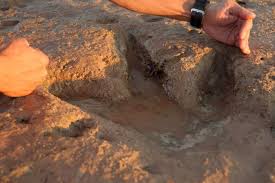
On 16 October 1996, it was reported that a set of fossilised dinosaur footprints had been stolen from a sacred Aboriginal site in outback Australia. The footprints came from the best preserved trackway of a stegosaur in the world, and were the world's only known set of fossilised stegosaurus prints. They were also the only … Continue reading December 30, 1998 – One of a set of stegosaurus prints stolen from a sacred Aboriginal site near Broome is recovered
Category: Australian History
December 29, 1960 – Australian cricketer David Boon was born
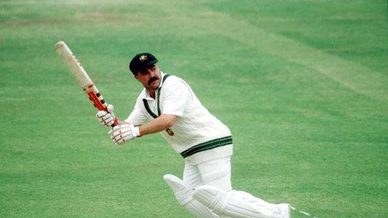
David Clarence Boon MBE is an Australian cricket match umpire, former cricket commentator and international cricketer whose international playing career spanned the years 1984–1996. He was born on December 29, 1960 in the Northern Tasmanian city of Launceston, the son of Clarrie and Lesley Boon. His father Clarrie worked in a newsagency in Launceston, while … Continue reading December 29, 1960 – Australian cricketer David Boon was born
December 28, 1850 – Henry Parkes establishes the ‘Empire’ newspaper, later giving rise to his prominent political career in Australia
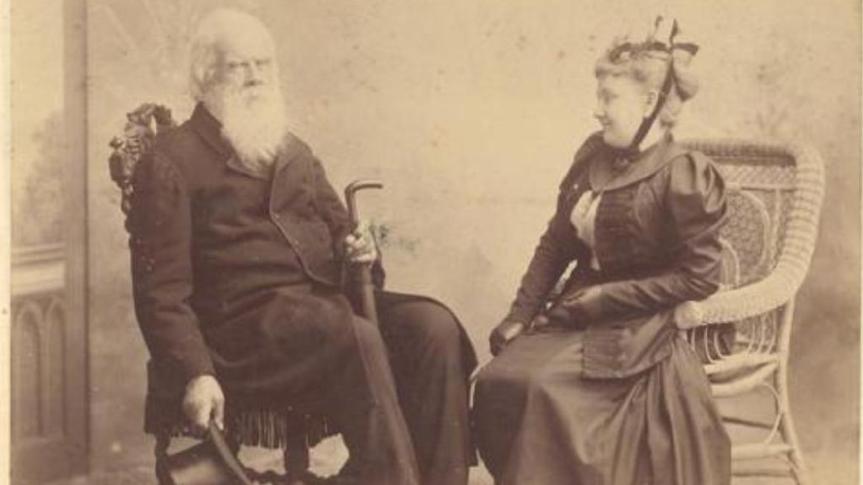
Henry Parkes was born in Warwickshire, England, on 27 May 1815. A failed business venture prompted him to seek passage with his wife to Australia, and he arrived in Sydney in 1839. Moving up from a position of farmer's labourer, to clerk, to managing his own business, a number of failed ventures indicated that he … Continue reading December 28, 1850 – Henry Parkes establishes the ‘Empire’ newspaper, later giving rise to his prominent political career in Australia
December 27, 1803 – Convict William Buckley escapes, spawning the Australian phrase “Buckley’s chance”
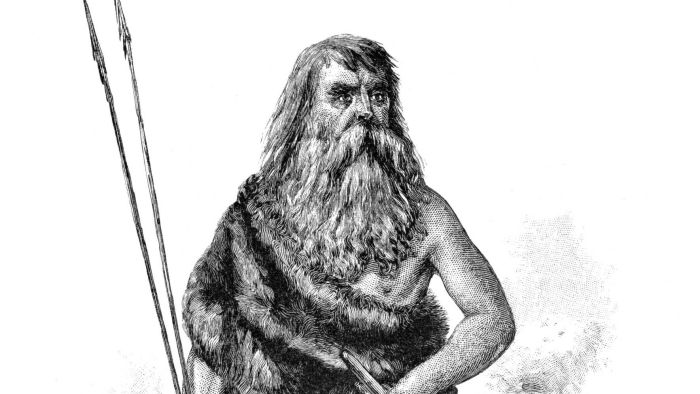
William Buckley was born in Marton, Cheshire, England in 1780. He arrived in Australia as a convict, and was a member of the first party of Europeans to attempt the first settlement at Sorrento, on the Mornington Peninsula, Victoria. On 27 December 1803, soon after his arrival, he escaped from custody. Despite the friendliness of … Continue reading December 27, 1803 – Convict William Buckley escapes, spawning the Australian phrase “Buckley’s chance”
December 26, 1945 – The first Sydney to Hobart yacht race is held in Australia

The Sydney to Hobart yacht race is a major Australian event held annually on Boxing Day. Hosted by the Cruising Yacht Club of Australia, the race starts in Sydney on Boxing Day and finishes in Hobart, a distance of 1167km, or 630 nautical miles. The first race was held on 26 December 1945, and included … Continue reading December 26, 1945 – The first Sydney to Hobart yacht race is held in Australia
December 25, 1974 – Cyclone Tracy leaves Darwin, in Australia’s Northern Territory, in tatters, killing at least 71
Darwin, the capital city of the Northern Territory, is located on Australia's far north-western coastline. With its tropical climate, it is regularly threatened by cyclones during the summer monsoon season. On 24 December 1974, Cyclone Tracy moved in. On Christmas Day, 25 December 1974, the cyclone left Darwin in shreds. The cyclone passed directly over … Continue reading December 25, 1974 – Cyclone Tracy leaves Darwin, in Australia’s Northern Territory, in tatters, killing at least 71
December 24, 1836 – Colonel William Light enthusiastically approves the site for Adelaide

Adelaide is the capital city of South Australia. Although not the only Australian state to have been founded by free settlers, it is the only state to have remained entirely free of convicts during its history. The site of Adelaide was originally determined by Captain Collet Barker. Barker was sent by Governor Darling in April … Continue reading December 24, 1836 – Colonel William Light enthusiastically approves the site for Adelaide
December 23, 1906 – Australian invention, the surf lifesaving reel, is demonstrated for the first time

Australia is a land of innovations and inventions: many of them developed out of necessity due to Australia's unusual or harsh conditions and environment. One such invention is the surf lifesaving reel. The world's first lifesaving clubs were spawned in Australia, when the Bronte Beach Surf Club was formed in 1903. Early rescue equipment was … Continue reading December 23, 1906 – Australian invention, the surf lifesaving reel, is demonstrated for the first time
December 22, 1845 – Land for the first gold mine in Australia is purchased
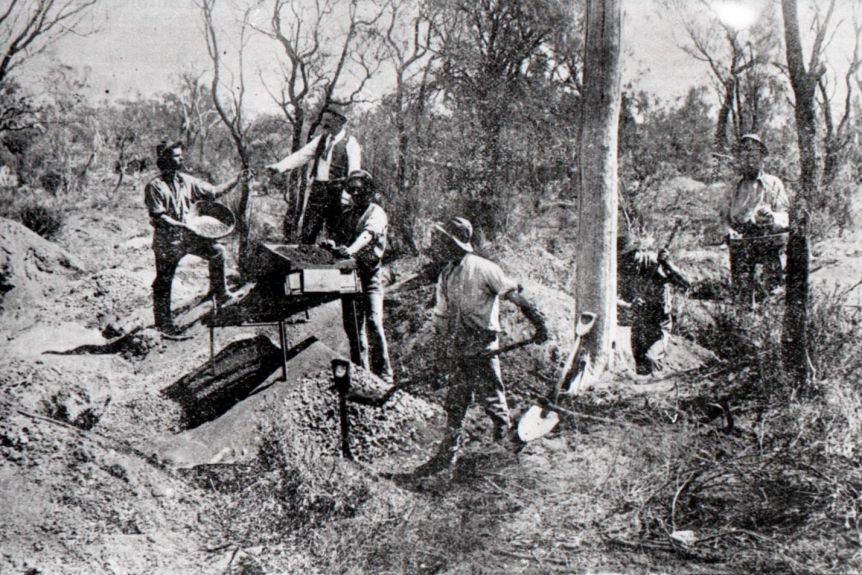
The first recorded gold discovery in Australia was in 1823 by James McBrien who discovered flecks of alluvial gold in the Fish River of New South Wales. Further traces of gold were discovered in areas of the Blue Mountains in the ensuing decades. Early discoveries of gold were kept secret as it was feared that … Continue reading December 22, 1845 – Land for the first gold mine in Australia is purchased
December 21, 1817 – Governor Macquarie recommends the use of the name ‘Australia’ instead of New Holland for the continent
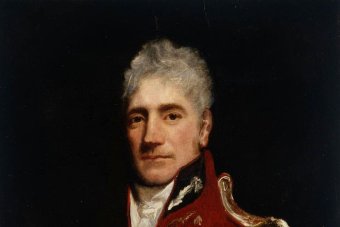
The first known Europeans to set foot on Australia’s shores were the Dutch, doing so over 150 years before English explorer James Cook ever sighted eastern Australia. In 1642, Abel Tasman sighted and named Van Diemen’s Land. After Tasman had established in 1644 that the continent was separate from other land masses to the north, … Continue reading December 21, 1817 – Governor Macquarie recommends the use of the name ‘Australia’ instead of New Holland for the continent
December 20, 1894 – Sir Robert Gordon Menzies, twelfth and longest-serving Prime Minister of Australia, is born
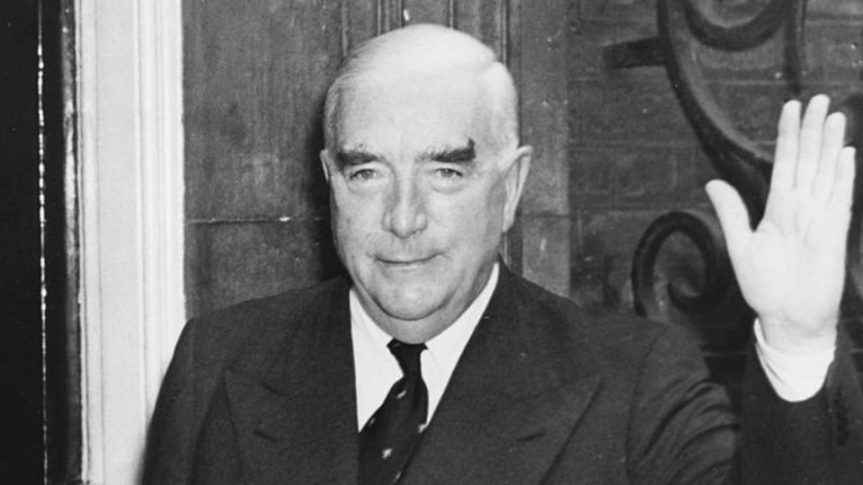
Robert Gordon Menzies was born in the Victorian town of Jeparit on 20 December 1894. In 1928 he entered politics after being elected to Victoria’s Legislative Council for East Yarra. After six years in Victorian state politics as Attorney-General and Minister for Railways (1928–34), he was elected to federal parliament as Member for Kooyong. On … Continue reading December 20, 1894 – Sir Robert Gordon Menzies, twelfth and longest-serving Prime Minister of Australia, is born
December 19, 1964 – The newly-built town of Jindabyne, relocated for the building of the Snowy Mountain Hydro-electric scheme, is opened.

The town of Jindabyne resulted from the earliest settlements in Australia's Snowy Mountains. It is thought to have come about after the Pendergast brothers, sons of an ex-convict, arrived in the area possibly as early as the 1820s. Sheep farming, wheat and a flour mill gave the town its first start, and more impetus came … Continue reading December 19, 1964 – The newly-built town of Jindabyne, relocated for the building of the Snowy Mountain Hydro-electric scheme, is opened.
December 18, 1894 – Women in South Australia unofficially gain the right to vote
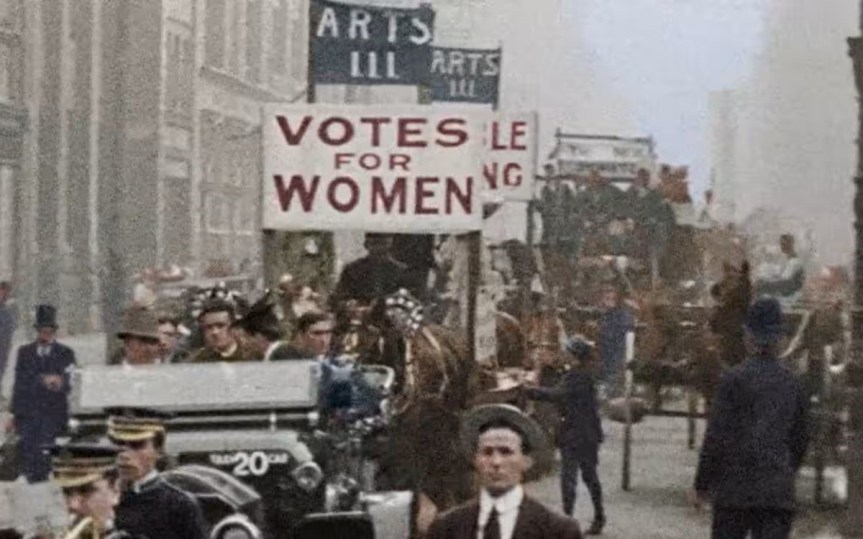
Women in South Australia gained the right to vote in 1894, and voted for the first time in the election of 1896. It is generally recognised that this right occurred with the passing of a Bill on 18 December 1894. However, a letter from the Attorney-General advising Governor Kintore that Royal Assent would be required … Continue reading December 18, 1894 – Women in South Australia unofficially gain the right to vote
December 17, 1967 – Australian Prime Minister Harold Holt goes missing whilst swimming at Portsea, Victoria
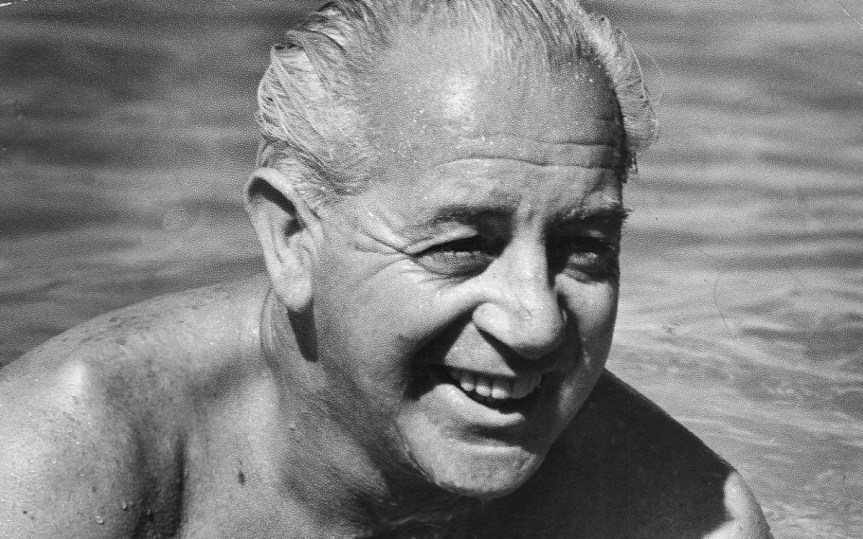
Harold Edward Holt was born in Sydney on 5 August 1908. After studying law at the University of Melbourne, he practised as a solicitor before being elected to Federal Parliament in 1936. After a thirty-year career in politics, he became Prime Minister following the retirement of Sir Robert Menzies in January 1966. Holt's time as … Continue reading December 17, 1967 – Australian Prime Minister Harold Holt goes missing whilst swimming at Portsea, Victoria
December 16, 1860 – Burke and Wills make the fateful decision to push on to the Gulf from Cooper Creek

Robert O'Hara Burke and William Wills led the expedition that was intended to bring fame and prestige to Victoria: being the first Europeans to cross Australia from south to north and back again. They set out on Monday, 20 August 1860, leaving from Royal Park, Melbourne, and farewelled by around 15,000 people. The exploration party … Continue reading December 16, 1860 – Burke and Wills make the fateful decision to push on to the Gulf from Cooper Creek
December 15, 2014 – Sydney, Australia, is gripped by a siege that lasts almost 17 hours and leaves three dead

Martin Place in the Sydney CBD is a popular plaza for both workers and visitors. It incorporates a range of commercial and retail businesses, as well as an amphitheatre utilised for corporate and community events, and is usually a bustling thoroughfare. On the morning of 15 December 2014, this peaceful and previously safe venue became … Continue reading December 15, 2014 – Sydney, Australia, is gripped by a siege that lasts almost 17 hours and leaves three dead
December 14, 1840 – Governor Gipps appoints the first Government Printer

In the first two decades of British settlement in Australia, all government notices were printed on a portable wooden and iron printing press that had come to New South Wales on the First Fleet in 1788. There were no experienced printers among the convicts until the convict transport ship "The Royal Admiral" brought George Howe … Continue reading December 14, 1840 – Governor Gipps appoints the first Government Printer
December 13, 1955 – Australian housewife “superstar”, Dame Edna Everage, makes her stage debut

Dame Edna Everage is the brainchild and ostentatious alter-ego of Australian actor Barry Humphries. The Moonee Ponds housewife, originally created as a parody of Australian suburban insularity, has developed from her earlier dowdiness to become a satire of stardom, the gaudily dressed, ostentatious, international Housewife Gigastar with outrageous glasses. Barry Humphries was born on 17 … Continue reading December 13, 1955 – Australian housewife “superstar”, Dame Edna Everage, makes her stage debut
December 12, 1882 – Australia’s worst gold mining disaster, to date, occurs in Creswick, Victoria
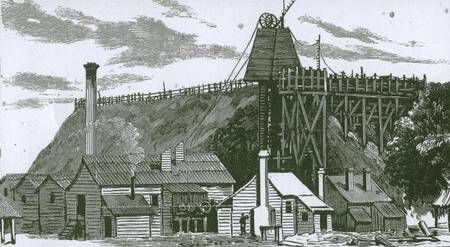
Creswick is a small town located in the heart of the central goldfields in Victoria, Australia. The town, which currently has a population of just over 3 000, was born after squatters Charles, John and Henry Creswick ran sheep in the area which became known as Creswick’s Creek in 1842. The discovery of gold in … Continue reading December 12, 1882 – Australia’s worst gold mining disaster, to date, occurs in Creswick, Victoria
December 11, 1931 – The Statute of Westminster gives complete legislative independence to countries of the British Commonwealth
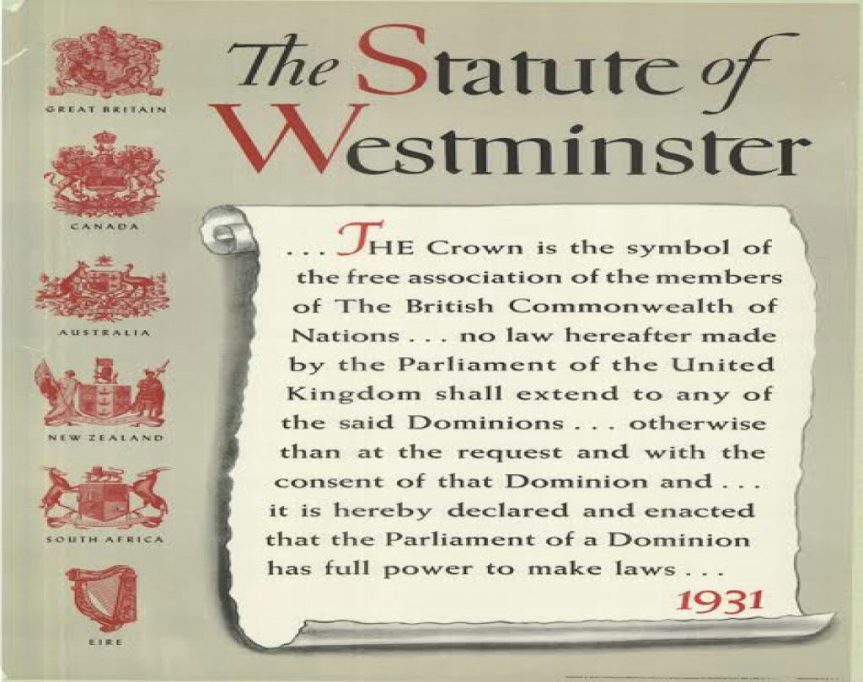
Whilst the Constitution of the Commonwealth of Australia came into effect on 1 January 1901, this did not mean that Australia had achieved independence from Britain. Under colonial federation approved by the United Kingdom, the six self-governing states of Australia merely allocated some functions to a federal authority. Australia was given the status of a … Continue reading December 11, 1931 – The Statute of Westminster gives complete legislative independence to countries of the British Commonwealth
December 10, 1859 – Today is Proclamation Day, marking Queensland’s official separation from New South Wales
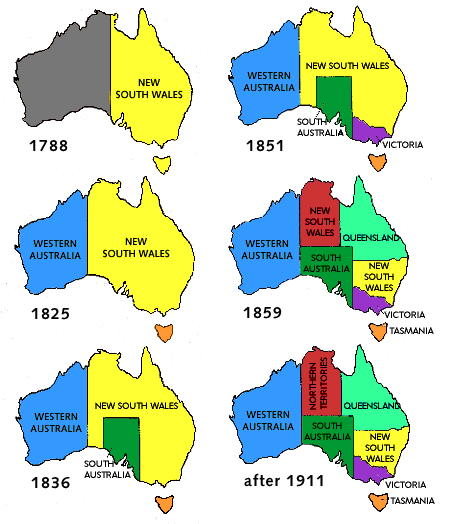
When the First Fleet arrived in Australia in 1788, the entire eastern half of Australia came under the name of New South Wales. The colony of Van Diemen's Land (later Tasmania) was established in 1825, and Victoria (Port Phillip District) separated from New South Wales in 1851. The first settlement in what is now Queensland … Continue reading December 10, 1859 – Today is Proclamation Day, marking Queensland’s official separation from New South Wales
December 9, 1941 – Australia formally declares war on Japan
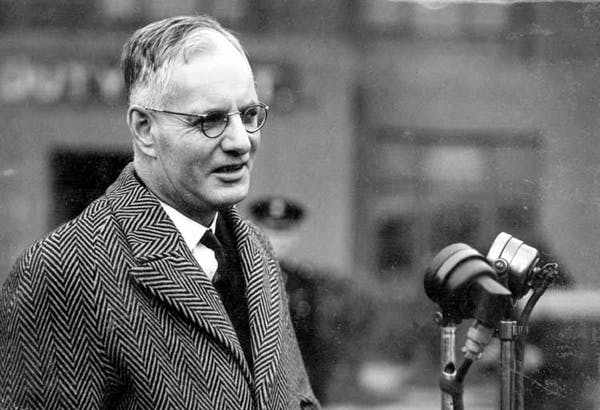
On the morning of 7 December 1941, the Imperial Japanese Navy launched a surprise attack on the Pacific Fleet of the United States Navy, stationed at Pearl Harbor, Oahu, Hawaii. This one act changed the direction of World War II. Despite the success of the Japanese in their aim of crippling the US navy, the … Continue reading December 9, 1941 – Australia formally declares war on Japan
December 8, 1801 – Matthew Flinders explores and charts King George’s Sound (later Albany) in Western Australia

Matthew Flinders was born in Lincolnshire, England, in 1774. Flinders and George Bass did much sea exploration around Australia, adding to the knowledge of the coastline, and producing accurate maps. As well as being the first to circumnavigate Australia, Flinders, together with Bass, was the first to prove that Van Diemen's Land, or Tasmania, was … Continue reading December 8, 1801 – Matthew Flinders explores and charts King George’s Sound (later Albany) in Western Australia
December 7, 1846 – Ludwig Leichhardt departs Jimbour Station on his second but unsuccessful expedition
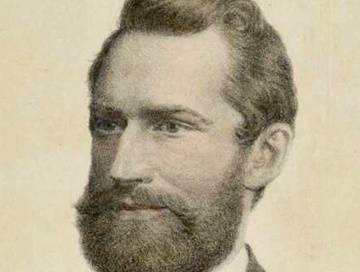
Ludwig Leichhardt was born in Prussia and studied in Germany. He was a passionate botanist who had an interest in exploration, although he lacked necessary bush survival skills. In October 1844, he left from Jimbour Station on the Darling Downs on an expedition to find a new route to Port Essington, near Darwin. The trip … Continue reading December 7, 1846 – Ludwig Leichhardt departs Jimbour Station on his second but unsuccessful expedition
December 6, 1784 – Transportation of convicts from England to Australia is first authorised
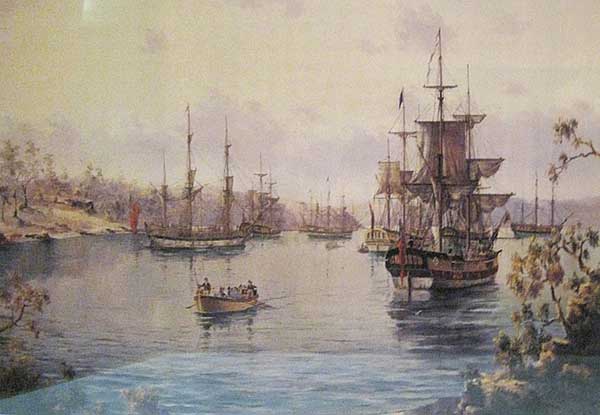
Conditions in England in the 18th century were tough: the industrial revolution had removed many people's opportunities to earn an honest wage as simpler tasks were replaced by machine labour. As unemployment rose, so did crime, especially the theft of basic necessities such as food and clothing. The British prison system was soon full to … Continue reading December 6, 1784 – Transportation of convicts from England to Australia is first authorised
 Craig Hill