
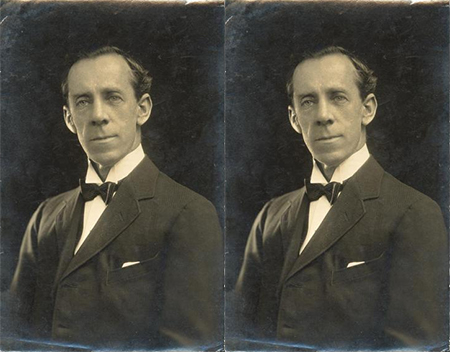
George Augustine Taylor was born in Sydney on 1 August 1872. As a young man, he trained as a builder and then worked as a cartoonist. However, emerging developments in science and technology began to capture his imagination. In 1908, he established a factory for the purpose of building light aircraft. As a student and … Continue reading December 5, 1909 – George Taylor, little-known pioneer in Australian aviation, achieves the first Australian flight of a heavier-than-air machine
Category: Australian History
December 4, 1956 – Australian swimmer Murray Rose sets world record 4:27.3 to claim the 400m gold medal at the Melbourne Olympics
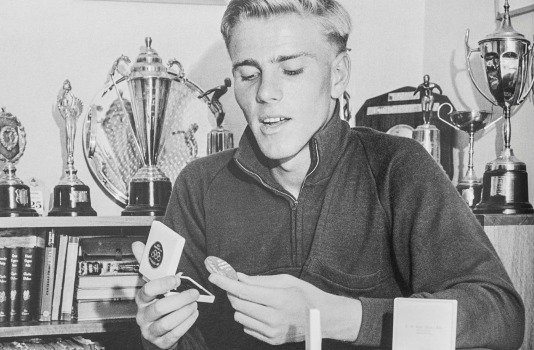
At age 17 Murray Rose became the youngest Olympian to win three gold medals during one Olympics. At the 1956 Games in Melbourne, Australia, Rose set an Olympic record in the 400-metre freestyle, won the 1,500-metre freestyle, and was a member of the world-record-breaking 4 × 200-metre relay team. At the 1960 Olympic Games in Rome, he set another record … Continue reading December 4, 1956 – Australian swimmer Murray Rose sets world record 4:27.3 to claim the 400m gold medal at the Melbourne Olympics
December 3, 1854 – The Battle of the Eureka Stockade is held near Ballarat, Victoria
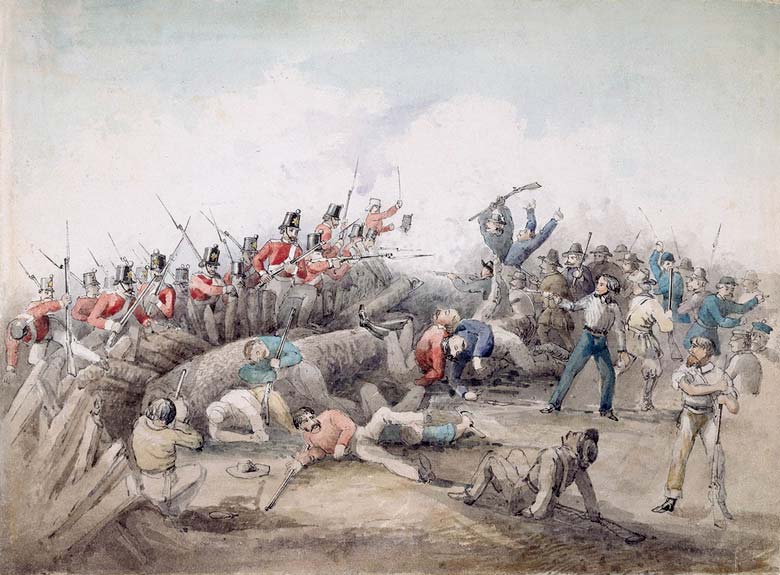
The Eureka Stockade was the rebellion initiated by the diggers on the Ballarat, Victoria goldfields in 1854. Conditions on the Australian goldfields were particularly harsh. The main source of discontent was the expensive miner's licence. It cost 30 shillings every month and permitted the holder to work a 3.6 metre square "claim". Licences had to … Continue reading December 3, 1854 – The Battle of the Eureka Stockade is held near Ballarat, Victoria
December 2, 1911 – Douglas Mawson departs Hobart to commence his Antarctic exploration
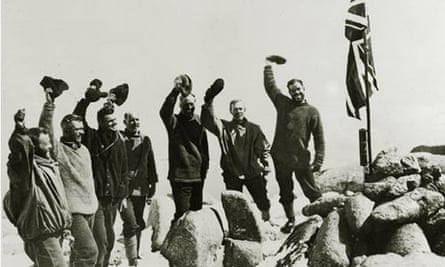
Australian Antarctic explorer, Douglas Mawson, was born on 5 May 1882, in Yorkshire, but his family emigrated to Australia in 1884. He studied geology at Sydney University, and was appointed geologist to an expedition to the New Hebrides in 1903. After this, he returned to Australia to become a lecturer in petrology and mineralogy at … Continue reading December 2, 1911 – Douglas Mawson departs Hobart to commence his Antarctic exploration
December 1, 1876 – Aboriginal stockman Sam Isaacs and teenager Grace Bussell rescue about 40 people from a stricken steamship off Western Australia
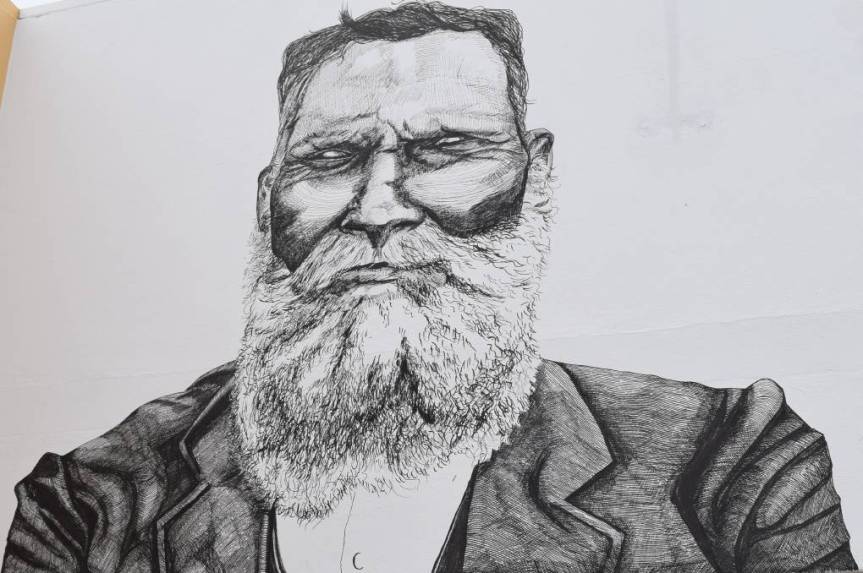
The SS Georgette was a steamship built in 1872, which was sold in England to Western Australia, and used as a coastal trading and passenger service between Fremantle, Albany and Champion Bay. On 1 December 1876, the Georgette sprang a leak 32km out to sea, whilst carrying fifty passengers and a cargo of jarrah wood. … Continue reading December 1, 1876 – Aboriginal stockman Sam Isaacs and teenager Grace Bussell rescue about 40 people from a stricken steamship off Western Australia
November 30, 1928 – Australian cricket icon Donald Bradman makes his Test debut
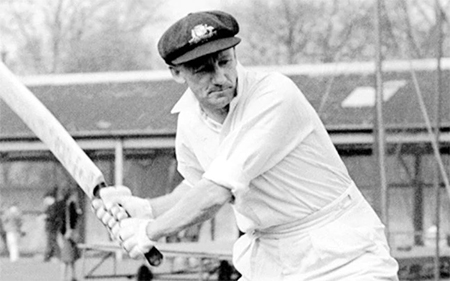
Donald George Bradman was born on 27 August 1908 in Cootamundra, New South Wales, Australia. One of Australia's most popular sporting heroes, he is often regarded as the greatest batsman of all time. The Bradman Museum and Bradman Oval are located in the New South Wales town of Bowral, where Bradman grew up, spending many … Continue reading November 30, 1928 – Australian cricket icon Donald Bradman makes his Test debut
November 29, 1948 – Australian Prime Minister Ben Chifley launches the first mass-produced Australian car, the Holden FX
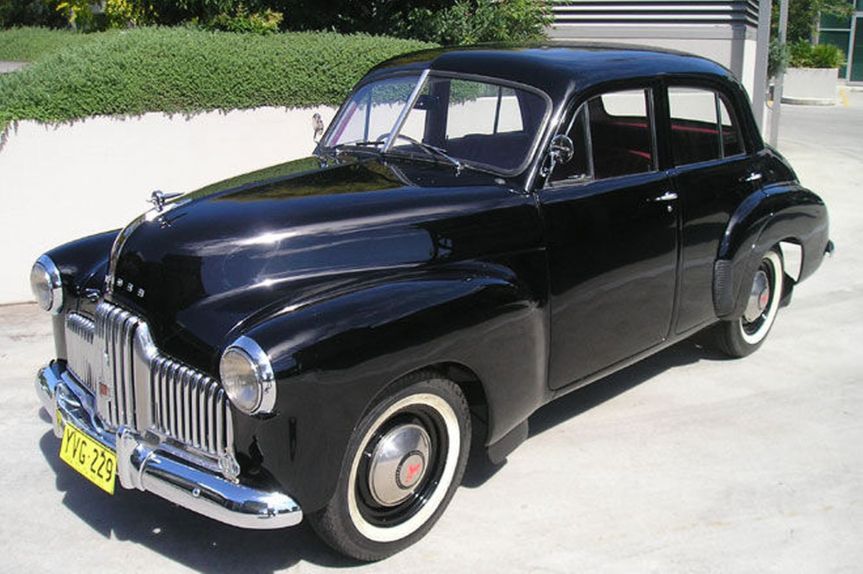
"Made in Australia, For Australia". These are the words spoken by Australian Prime Minister Ben Chifley when he launched the Holden FX on 29 November 1948. The real name of the Holden FX is 48/215. '48 was the year it started production, and 215 indicated a Standard Sedan. The name "FX" originated as an unofficial … Continue reading November 29, 1948 – Australian Prime Minister Ben Chifley launches the first mass-produced Australian car, the Holden FX
November 28, 1932 – The ‘Dog on the Tuckerbox’ statue at Gundagai is unveiled

The "Dog on the Tuckerbox" is an historical monument situated in southern New South Wales, Australia. Celebrated in Australian folklore, poetry, and song as being either five or nine miles from Gundagai, the Dog on the Tuckerbox sits approximately 5 miles, or eight kilometres, from Gundagai. Gundagai's Dog on the Tuckerbox originated out of an … Continue reading November 28, 1932 – The ‘Dog on the Tuckerbox’ statue at Gundagai is unveiled
November 27, 1880 – Sir Ralph Freeman, designer of the Sydney Harbour Bridge, is born
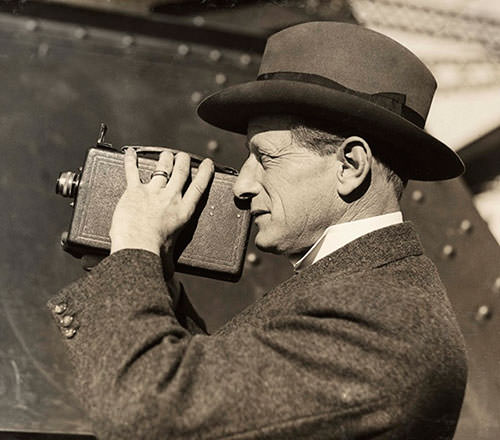
Ralph Freeman was born on 27 November 1880 in London, England. After studying civil engineering at the City and Guilds of London Institute, he joined Douglas Fox & Partners, a firm of consulting engineers specialising in the design of steel bridges. He rose to become senior partner and in 1938 the firm changed its name … Continue reading November 27, 1880 – Sir Ralph Freeman, designer of the Sydney Harbour Bridge, is born
November 26, 1838 – A second trial finds some of the perpetrators of the Myall Creek massacre of Aborigines guilty of murder
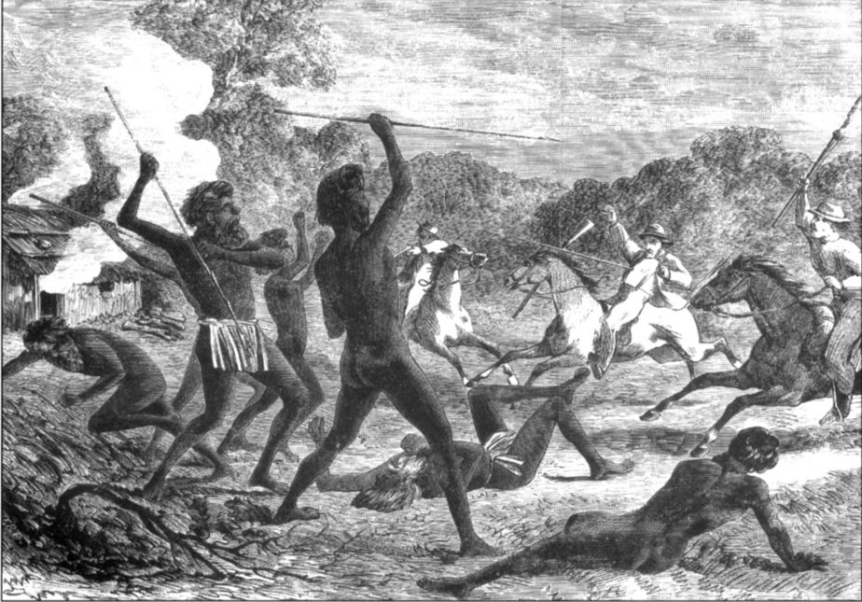
After numerous clashes between European settlers and Aboriginals people in late 1837 in northwest New South Wales, tensions were high. On 10 June 1838, a gang of stockmen, heavily armed, rounded up between 40 and 50 Aboriginal women, children and elderly men at Henry Dangar's Myall Creek Station, not far from Inverell in New South … Continue reading November 26, 1838 – A second trial finds some of the perpetrators of the Myall Creek massacre of Aborigines guilty of murder
November 25, 1880 – Reverend John Flynn, founder of the Royal Flying Doctor Service, is born
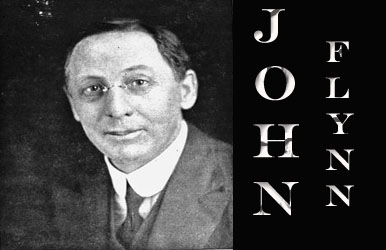
Australia's Flying Doctor Service began with the vision of Reverend John Flynn. John Flynn was born on 25 November 1880, in the gold rush town of Moliagul, about 202 kilometres north-west of Melbourne, Victoria. Flynn's first posting as a Presbyterian minister was to Beltana, a tiny, remote settlement 500 kilometres north of Adelaide. After writing … Continue reading November 25, 1880 – Reverend John Flynn, founder of the Royal Flying Doctor Service, is born
November 24, 1642 – Dutch explorer Abel Tasman reaches Tasmania, naming it Van Diemen’s Land
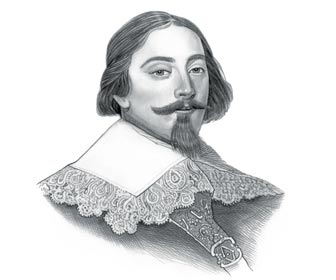
Abel Janszoon Tasman was a Dutch seafarer and explorer born in 1603 in the village of Lutjegast, Netherlands. In 1634 Tasman joined the Dutch East India Company and, after gaining further experience and promotions, was ordered to explore the south-east waters in order to find a new sea trade route to Chile in South America. … Continue reading November 24, 1642 – Dutch explorer Abel Tasman reaches Tasmania, naming it Van Diemen’s Land
November 23, 1923 – Australia’s first public wireless broadcast begins

The development of the wireless telegraphy system, which came to be known as "radio" is attributed to Guglielmo Marconi. Marconi first demonstrated the transmission and reception of Morse Code based radio signals over a distance of 2 or more kilometres in England in 1896, and from this point began the development and expansion of radio … Continue reading November 23, 1923 – Australia’s first public wireless broadcast begins
November 22, 1956 – The opening ceremony for the Melbourne Olympics is held
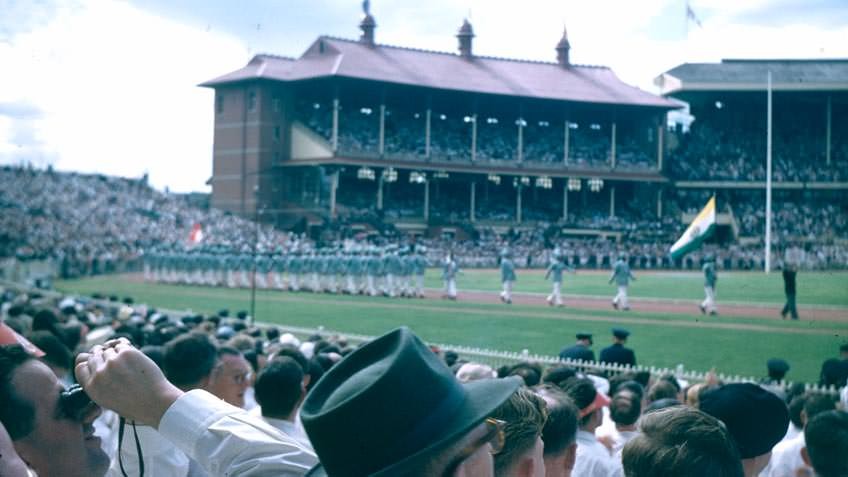
Melbourne was announced as the host city for the Games of the XVI Olympiad on 28 April 1949, beating bids from Buenos Aires, Mexico City and six other American cities by a single vote. The Olympic Games commenced with an opening ceremony on 22 November 1956. Because Melbourne is located in the southern hemisphere, the … Continue reading November 22, 1956 – The opening ceremony for the Melbourne Olympics is held
November 21, 1936 – Victor Chang, Australian heart surgeon and one of the pioneers of modern heart transplantation, is born
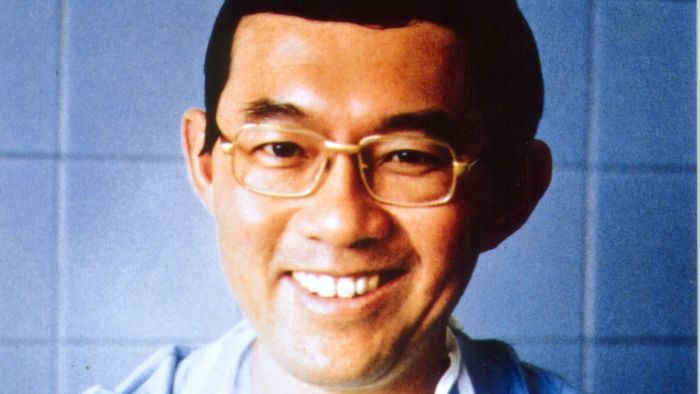
Victor Peter Chang Yam Him was born in Shanghai, China, on 21 November 1936. Chang's mother died of cancer when he was just twelve years old, and this was a deciding factor in his choice to become a doctor. He came to Australia to complete his secondary schooling in 1953, then studied medicine at the … Continue reading November 21, 1936 – Victor Chang, Australian heart surgeon and one of the pioneers of modern heart transplantation, is born
November 20, 1860 – Burke and Wills first reach Cooper Creek

Robert O'Hara Burke and William Wills led the expedition that was intended to bring fame and prestige to Victoria: being the first white people to cross Australia from south to north and back again. They set out on Monday, 20 August 1860, leaving from Royal Park, Melbourne, and farewelled by around 15,000 people. The exploration … Continue reading November 20, 1860 – Burke and Wills first reach Cooper Creek
November 19, 1946 – Australian country music singer Slim Dusty records his first single

David Gordon "Slim Dusty" Kirkpatrick was born on 13 June 1927 in Kempsey, New South Wales, Australia. The son of a cattle farmer, he was brought up on Nulla Nulla Creek dairy farm. He wrote his first song, entitled "The Way The Cowboy Dies" at age ten and took the name "Slim Dusty" when he … Continue reading November 19, 1946 – Australian country music singer Slim Dusty records his first single
November 18, 1879 – One of Australia’s youngest bushrangers, a 15-year-old member of Captain Moonlite’s gang, is shot and killed.
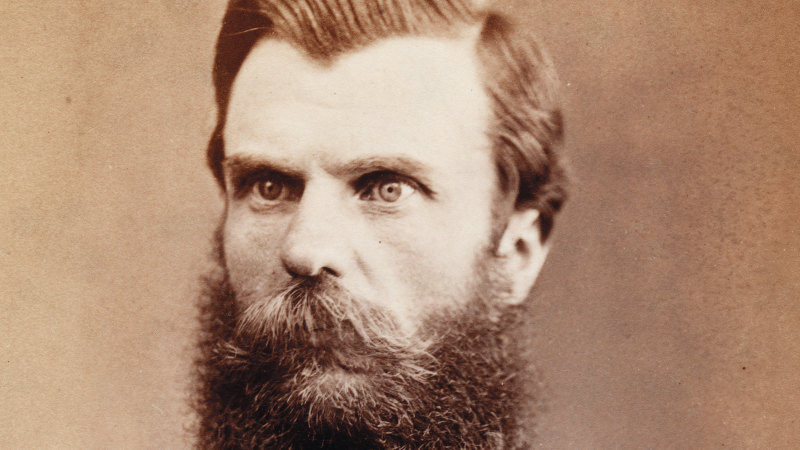
Augustus Wernicke was one of Australia's youngest bushrangers, and part of Captain Moonlite's gang. Captain Moonlite, aka Andrew George Scott, became a bushranger upon his release from gaol, eight years after robbing the bank at Mount Egerton, Victoria. He recruited several other gang members, among them 15-year-old Wernicke, and walked to New South Wales, hoping … Continue reading November 18, 1879 – One of Australia’s youngest bushrangers, a 15-year-old member of Captain Moonlite’s gang, is shot and killed.
November 17, 1840 – Eyre replenishes his supplies at Fowler’s Bay, South Australia

Edward John Eyre was the first white man to cross southern Australia from Adelaide to the west, travelling across the Nullarbor Plain to King George's Sound, now called Albany. Eyre began the journey with his overseer, John Baxter, and three Aborigines, intending to cross the continent from south to north. He was forced to revise … Continue reading November 17, 1840 – Eyre replenishes his supplies at Fowler’s Bay, South Australia
 Craig Hill