

.
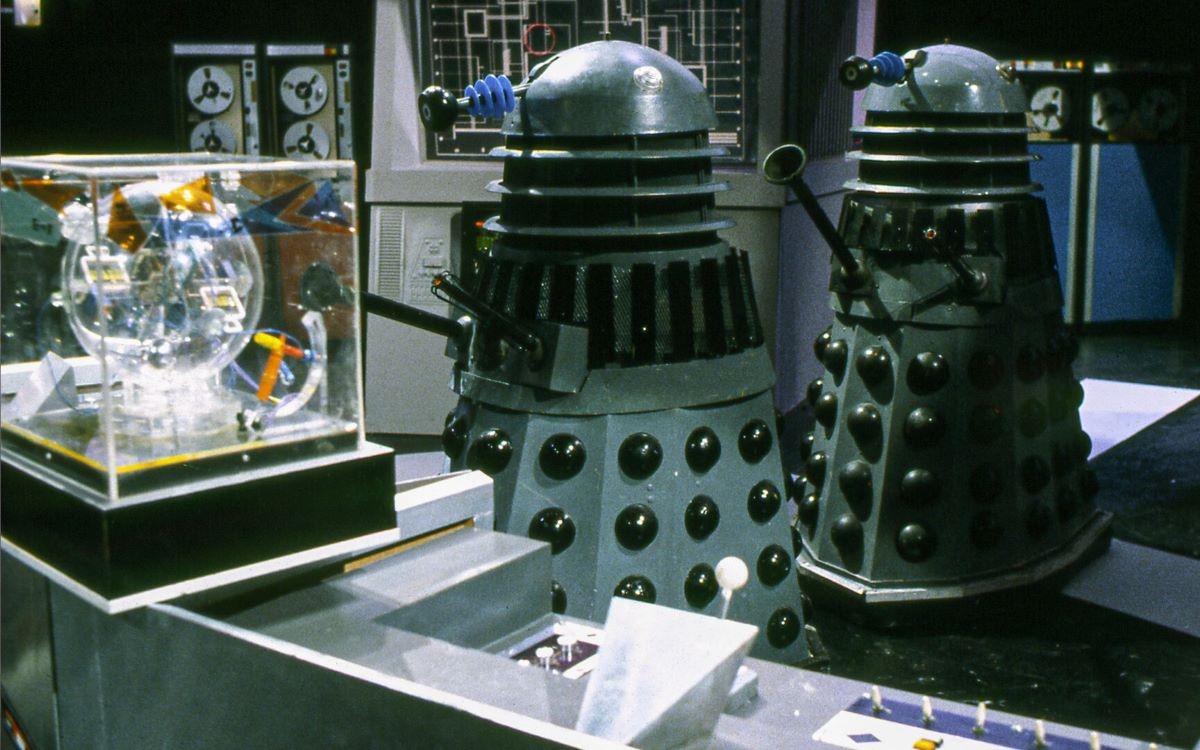
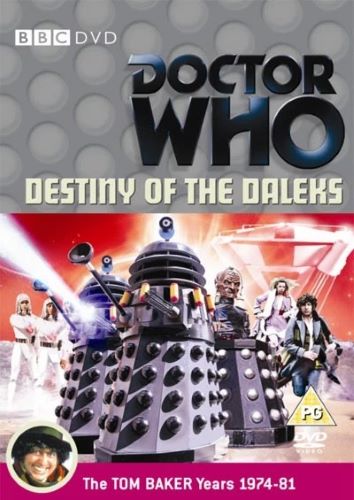
Destiny of the Daleks is the first serial of Doctor Who Season 17. It was originally broadcast in four episodes from September 1 to September 22, 1979. It was written by Terry Nation and directed by Ken Grieve. It stars Tom Baker as the Fourth Doctor, Lalla Ward as Romana, David Gooderson as Davros, and Roy Skelton as the voices of the Daleks.
The Doctor and Romana arrive on the ruined world of Skaro and find the Daleks searching for their creator to win a cold, logical war against the android Movellans. Human slaves are forced to dig while both sides rely on computers and perfect strategies, leaving the Doctor to break the stalemate with wit and risk.
Episode One
The Doctor fits the randomiser and aims for a holiday; the TARDIS lands on a blasted, radioactive world of dust and toppled domes. Romana “tries on” a new body, then the pair explore ruins where wind hisses through dead conduits. A shaft drops into darkness; underground, human slaves in rags chip at fused doors while Daleks patrol and bark orders.
Tyssan, a captured navigator, whispers that the machines are digging for something ancient in the Kaled city: the very place the Doctor once left Davros entombed. A rockfall separates the travellers; Romana is seized, tagged, and marched to a “test corridor” where heat, radiation, and pressure rise step by step to clear booby traps before Daleks pass. On the surface, the Doctor takes cover from patrols and notes strange, neat footprints that belong to neither man nor Dalek.
He follows a humming signal to a sleek needle-shape half-buried in scree: an alien ship that does not match Dalek design. Below, the test peaks; Romana staggers and drops from the heat. Daleks trundle over her collapsed form, satisfied their path is clear, and order the dig sped up. The Doctor slips into the tunnels to find Tyssan: and rolls straight into a ring of gun-stalks as the word “EXTERMINATE!” fills the air.
Episode Two
Romana is not dead, just playing possum. She scrambles free, steals a tool, and vanishes into service ducts. The Doctor is herded to the work gang, where Tyssan fills in the horror: the Daleks are searching for Davros to end a galactic war they are losing. On the surface, the Doctor tracks the mystery craft and meets its owners (the Movellans), elegant, silver-braided beings who claim to be studying Dalek movements.
Their calm is a touch too polished. Below, a sealed chamber finally yields, revealing Davros in stasis, scorched and skeletal, exactly where time left him. Dalek manipulators twitch with something like reverence as they begin the revival. The Movellan commander coolly questions the Doctor about “Dalek logic.” He notices concealed power packs at their belts and files the detail away.
In the tunnels, Romana frees Tyssan and the other prisoners with quiet, clever sabotage. Davros’s single eye flickers open. He drinks in the news of centuries, asks after “the Doctor,” and settles into command with chilling ease. The Daleks force the slaves to haul equipment, promising life to those who obey. On the plain, a dust squall rolls over the Movellan ship as the Doctor realises both sides are fighting a war by computer. Logic faces logic: and stalls.
Episode Three
The stalemate comes into focus. In orbit, Dalek and Movellan fleets hang motionless, each waiting for the other to make the first calculable mistake. Both need a wild card. The Movellans want the Doctor’s “illogical” intuition; the Daleks want Davros. Revived and venomously lucid, he probes a Dalek report and laughs: his creations have become slaves to probability.
He will correct that flaw. Underground, Romana arms the prisoners with stolen tools and a plan; above, the Doctor tests a hypothesis, tugs the cord at a Movellan’s belt, and the elegant warrior collapses like a puppet: their bodies are android, their pride a shell. He whispers the trick to Tyssan’s people. The Movellans change tactics, smile wider, and politely imprison the Doctor to “consult” on a final strike. Davros examines captured Movellan tech and sketches a counter-attack against their ship.
He talks of destiny; the Daleks hang on every rasping syllable. A patrol corners Romana; Tyssan draws them off, buying time. Davros orders the Doctor delivered alive. Movellan scouts advance to seize Romana instead: she will force the Doctor’s cooperation. In the stone-lit chamber where Davros once promised a thousand-year empire, voices of machine war echo from slate; outside, a silent countdown begins toward mutually assured logic.
Episode Four
Everything breaks at once. Tyssan’s freed slaves fan through the tunnels, plucking power packs from Movellans who crumple mid-command. The Doctor raids their ship for proximity mines and sprints back into the city. He slaps the devices onto Dalek casings in a deadly hopscotch as Davros howls orders.
Romana yanks belts from android sentries and leads prisoners to the surface. Davros, incandescent with purpose, tries to trigger a strike that will turn Skaro into a memory; the Doctor cuts the circuit and faces him across the wreckage of old dreams. Daleks explode in muffled blossoms; Movellans lie in tidy heaps. The logic war is lost to chaos and nerve. With the fight collapsing, Davros aims a weapon at the Doctor and finds Tyssan at his back with a staser.
The old tyrant spits prophecies and defiance; the Doctor answers with a practical mercy: cryogenic suspension for transport and trial. Tyssan seals the capsule; the Dalek survivors withdraw into the ruins, already scheming a next plan. On the surface, the Movellan ship sits dark; its crew, disarmed, are cargo. Dust drifts over broken domes the Doctor remembers too well. He and Romana step into the TARDIS, the randomiser already spinning, leaving Skaro to nurse its wounds and history to circle back, as it always does.
Themes
As the Key to Time afterglow fades, Destiny of the Daleks opens the next chapter with brisk, witty confidence: quarry dust, logic traps, and a newly regenerated Romana sparring delightfully with the Doctor. It never reaches the moral thunder of Genesis of the Daleks nor the jewelled elegance of The Robots of Death, and it sits a notch under the season’s pinnacle in City of Death.
Yet it’s livelier and more cohesive than journeyman outings like The Power of Kroll and more substantial than the baggier stretches of The Horns of Nimon. In the era’s ledger, it settles as a solid mid-tier entry: clever premise, uneven finish, buoyed by Tom Baker’s gleam and Douglas Adams’ comic snap around the edges.
Continuity-wise, the threads tighten neatly. The Randomiser fitted at the end of The Armageddon Factor tumbles the TARDIS straight into Skaro; Romana’s regeneration winks back to Princess Astra and sets a new partnership that will hum through City of Death, Nightmare of Eden, and beyond.
Davros’s return explicitly answers Genesis of the Daleks, and his fate here (frozen for trial) points down the line to his rescue in Resurrection of the Daleks and the darker reckonings of Revelation of the Daleks and Remembrance of the Daleks. Even the Movellan war seeds echoes that the series will occasionally revisit. By the final fade, Destiny of the Daleks has done its job: it reopens one of the programme’s oldest wounds, refreshes its central duo, and steers Season 17 toward a lighter, sharper orbit.
.
To view the list of other Doctor Who serials, please click this link
Doctor Who Episode Guides for Sale on Amazon
Step aboard the TARDIS and journey across the universe with every incarnation of The Doctor in this series of unofficial Doctor Who episode companions.
This collection of twelve books explores every televised adventure of the Time Lord’s lives.
Each volume in the series delves into a different Doctor’s era, offering detailed episode guides, behind-the-scenes insights, character profiles, and story synopses.
Once you have clicked the link, choose which book you want, and then whether you want to buy the Kindle (eBook) or Paperback versions.
Previews are available before you buy.

Visit the Australian Book and Language Studio
Discover more from Craig Hill
Subscribe to get the latest posts sent to your email.

