
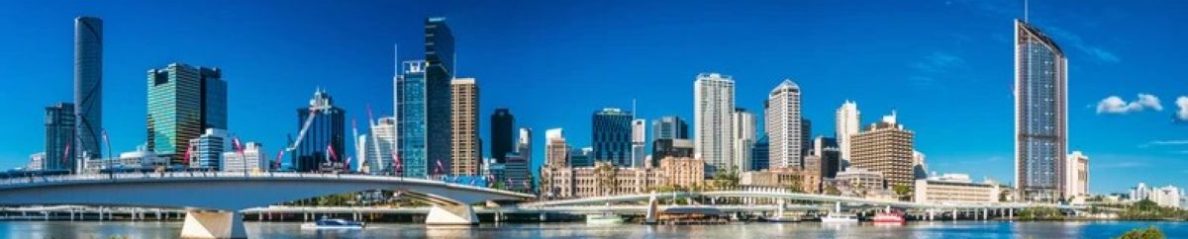

On 14 November 2005, bomb threats were made to the Brisbane public transport system. As a result, Brisbane’s CBD was evacuated and public transport systems throughout Brisbane were shut down.
On the 14th, three calls were made to police warning of bombs on buses and trains in Brisbane. All bus and train services in the city were evacuated at 12:00 pm and again at 4:45 pm.
The shutdowns caused major problems for the thousands of people who relied on the services.
At that time, I was working as a journalist at Big Issue Magazine in Brisbane. We received a call from police asking if we could help them find the homeless squatting in Brisbane, who may be unaware of the evacuation.
So I headed off with a police officer to the magazine vendors selling points and their squats in abandoned Brisbane buildings, warning them of the potential danger.
We were still wandering around after the entire CBD had been evacuated. Buses stopped in the streets at 4:45 pm, and remained empty where they stopped. Passengers were told to walk out of the CBD, and a team of workers were assisting the elderly and disabled who couldn’t walk.
Every office building, apartment building, hotel and shop were completely empty. The streets were completely deserted. There were very few cars, just empty buses on the sides of the streets. There was an eerie silence over the entire city at what should have been the busiest time of the day, peak hour.
One has to pause here and give credit to the Queensland Police, SES, Emergency Services, Queensland Government, Australian Defence Force and Brisbane City Council staff who all worked together on short notice to evacuate Australia’s third largest city in just a few hours.
Credit should also go to the journalists and media outlets who broadcast the warnings and evacuation directions with a distinct professionalism, while trying not to cause a panic.
And of course praise should go to the people of Brisbane, who evacuated the city centre with calmness, patience and more than a little distinctive Aussie humour. No stampedes, no panic in the streets, just tens of thousands of people walking with some bemusement out of the CBD.
At around 5:30 pm, the police officer and myself were satisfied that we had found every streetie that we could, and we also evacuated the area. Strangely, I didn’t feel panicked at all, having spent many years as an SES and Bush Fire Brigade volunteer. I simply went home, and watched the reports on TV.
At 7.32 am on 15 November, another call was made to police telling them to remain vigilant and “keep their eye on the ball.” Each of the four calls had been made from a different payphone in suburban Brisbane.
On the night of 15 November, Rodney Bruce Watson, a 46-year-old truck driver from Munruben, was arrested and charged with four counts of making bomb threats.
Police reported that his fingerprints had been found on three of the four payphones used to make the bomb threats, although Watson’s lawyer said Watson claimed he had not “been to a phone box in years.”
Watson appeared in the Brisbane Magistrates Court on 16 November. He did not enter a plea and made an application for bail. The bail hearing was adjourned, pending a psychiatric report on Watson, and he was remanded in custody.
Watson reportedly said to police that he had been “inspired by the recent arrests of terrorist suspects in southern states,” and he subsequently had two applications for bail denied on the basis that there was a risk that he would reoffend.
On 7 March 2006, Watson pleaded guilty to four counts of making a bomb threat, and on 28 July was sentenced to three years in prison, to be suspended after 12 months, followed by a supervision period of three years.
With time already served this meant Watson was released from prison in November 2006.
To see other events that happened in Australian history, visit the blog site of Advance Institute of Business by clicking on this link.
Advance Institute of Business has nationally recogised Certificate and Diploma courses available to help you progress in your career.
The Certificate IV in TESOL will allow you to teach English in Australia and many other countries.

The 10773NAT Certificate IV in TESOL is a nationally and internationally recognised qualification that will allow you to teach English to speakers of other languages in Australia and many other countries.
The practical component can be done in your own country (conditions apply), Vietnam or Cambodia. If you choose to do the practical component in Vietnam or Cambodia, we will provide hotel accommodation at no extra cost.
We have the following Certificate and Diploma courses available for your career development:
Teaching Courses
Business
Leadership and Management
Entrepreneurship and New Business
- Certificate III in Entrepreneurship and New Business
- Certificate IV in Entrepreneurship and New Business
Accounting
We will soon also be offering:
- Advanced Diploma of Business
- Diploma of Human Resource Management
- Diploma of Marketing and Communication
And there will be more courses to come in the future.
Our non-accredited speciality courses:
- Career Paths (43 career paths to choose from)
- Corporate Training
- Business English
- English Tutoring
- University and College Tutoring
- Professional and Academic Writing Skills
- Where to Study in Australia
- Education Consultancy
25% discount on all courses for Centrelink and Veteran’s Affairs recipients.
All courses are nationally recognised through our Registered Training Organisation partner Skills Recognition International (RTO 32373). We also have an advisory service on where to study in Australia.
To find out more about these courses, please click this link to arrange a free video or phone call.
Discover more from Craig Hill
Subscribe to get the latest posts sent to your email.
 Craig Hill