

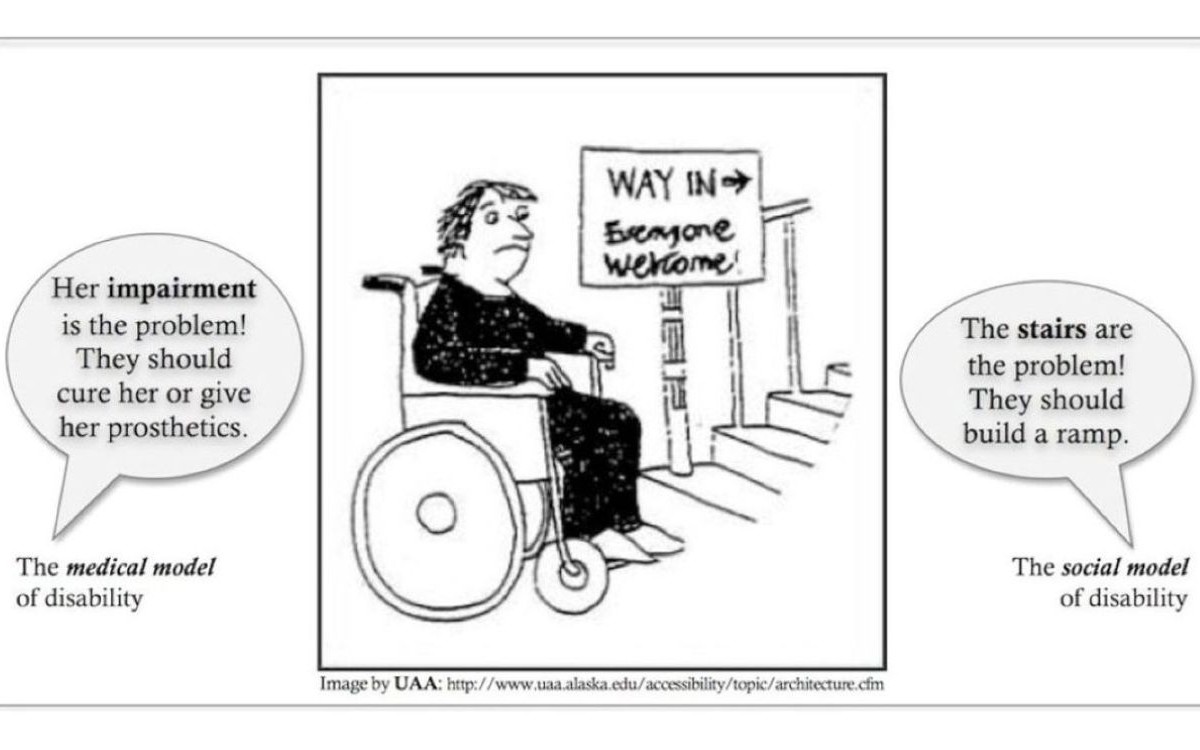
The social model of disability is a framework for understanding disability that emphasises the role of society in creating barriers to inclusion and equal participation for individuals with disabilities.
It is a contrast to the traditional medical model of disability which focuses on the individual’s medical condition as the cause of their limitations. In this blog post, we will explore the social model of disability in more detail.
The social model of disability suggests that disability is not an inherent characteristic of individuals, but rather a result of the interaction between individuals and their environment. It recognizes that disability is caused by social, economic, and political barriers that prevent individuals with disabilities from fully participating in society.
The social model of disability proposes that the solution to these barriers is to remove them and create a more inclusive and accessible society. This involves addressing issues such as physical and attitudinal barriers, discrimination, and unequal access to resources and opportunities.
The social model of disability emphasises the importance of empowering individuals with disabilities and involving them in decision-making processes that affect their lives. It recognises that individuals with disabilities have unique experiences and perspectives that are valuable in creating a more inclusive society.
Key Principles of the Social Model of Disability:
- Disability is a social construct: The social model of disability recognises that disability is not an inherent characteristic of individuals but is instead created by social, economic, and political factors that create barriers to participation and inclusion.
- Physical and attitudinal barriers are the cause of disability: The social model of disability identifies physical and attitudinal barriers, such as inaccessible buildings and negative stereotypes, as the primary cause of disability.
- Social change is needed to remove barriers: The social model of disability advocates for social change to remove barriers to inclusion and participation. This includes changes to physical infrastructure, attitudes, and policies.
- Empowerment of individuals with disabilities is key: The social model of disability recognises the importance of empowering individuals with disabilities and involving them in decision-making processes that affect their lives.
- Inclusion and accessibility benefit everyone: The social model of disability recognises that creating a more inclusive and accessible society benefits everyone, not just individuals with disabilities.
By recognising that disability is a social construct and addressing physical and attitudinal barriers, we can work towards creating a more inclusive and accessible society. By empowering individuals with disabilities and involving them in decision-making processes, we can ensure that their unique experiences and perspectives are valued in creating a more inclusive society.
Craig Hill is a Brisbane-based Social Justice Campaigner, Writer, Teacher and Business Consultant. He has campaigned for social justice in Australia, promoted human rights in China and worked with the homeless in Honolulu. He holds a Graduate Certificate in Business, a Graduate Certificate in Education and a degree in Management. He is also the General Manager of The Australian Business and Leadership School.
If you liked this article, please click “Subscribe To My Blog” in the sidebar to receive an email each time a new article is published.
Visit the Australian Book and Language Studio
Discover more from Craig Hill
Subscribe to get the latest posts sent to your email.
 Craig Hill