

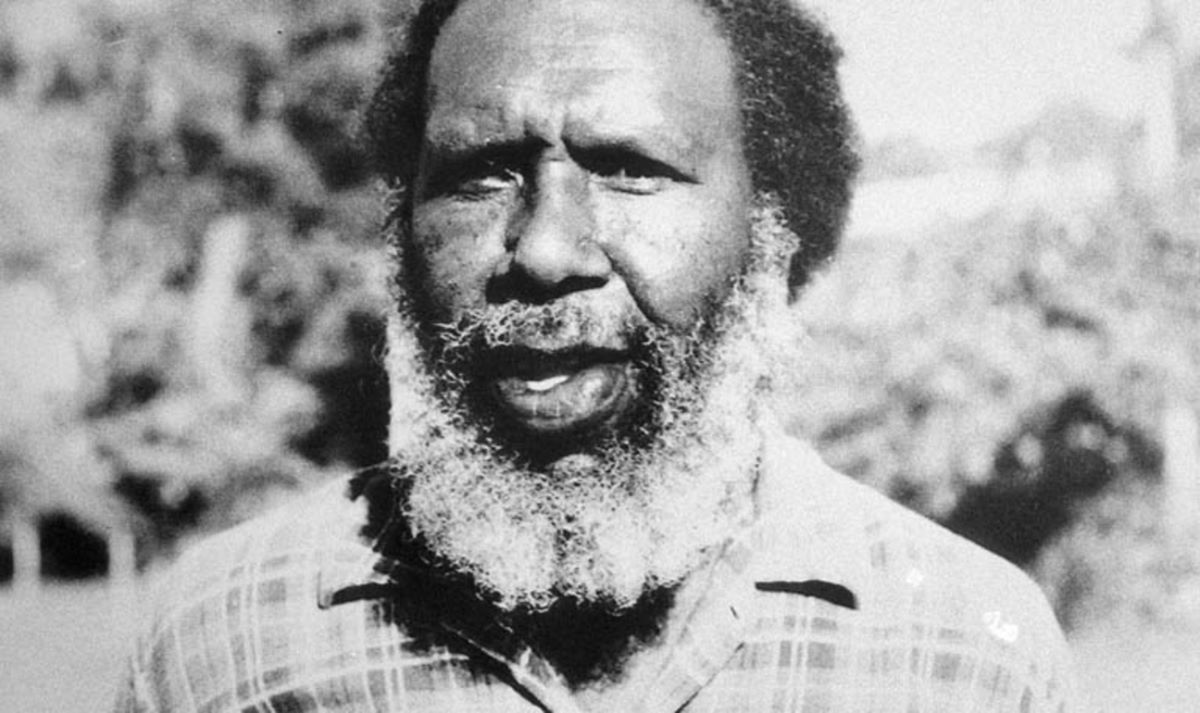
On 8 December 1988, Mabo v Queensland (1988) in the High Court of Australia found that the Queensland Coast Islands Declaratory Act, which attempted to retrospectively abolish native title rights, was not valid.
Mabo v Queensland (No 1), was a significant court case decided in the High Court of Australia on 8 December 1988. It found that the Queensland Coast Islands Declaratory Act 1985, which attempted to retrospectively abolish native title rights, was not valid according to the Racial Discrimination Act 1975.
The case was closely related to another proceeding in the High Court (Mabo v Queensland (No 2), decided in 1992) which was a dispute between the Meriam people (of the Mer Islands in the Torres Strait) and the Government of Queensland, in which several Meriam people, principally Eddie Mabo, contested that they had certain native title rights over the Murray Islands.
In 1985, the Queensland Government passed the Queensland Coast Islands Declaratory Act, which was intended to retrospectively abolish any such native title rights, if they existed.
The Meriam people sought a demurrer to prevent the Queensland Government from relying on the Coast Islands Declaratory Act in their defence to the main case.
The case
The main argument of the plaintiffs was that the Coast Islands Act was invalid, because it was contrary to the Racial Discrimination Act 1975, a law passed by the Parliament of Australia. Section 109 of the Constitution of Australia provides that where an Act of a state parliament is inconsistent with an Act of the Parliament of Australia, the state act is invalid to the extent of the inconsistency.
As such, the plaintiffs argued that the Queensland Government were not able to rely on the Coast Islands Act as part of their defence in the main case. The Queensland Government argued that the Act was valid, and had the effect of extinguishing any rights which the plaintiffs may have had, which may have survived annexation of the islands in 1879.
Both parties agreed that the case should proceed on the assumption that the plaintiffs did actually hold native title rights, although the question had not been decided yet. The court agreed that the Coast Islands Act did operate to extinguish native title rights, if indeed they did exist. The main question was thus whether the Coast Islands Act was valid.
Section 10(1) of the Act provides that Commonwealth or State laws which deprive a person of one race or ethnic group of a right enjoyed by another group, then that law does not have effect. An important question was whether laws which have the effect of removing or limiting rights which are held only by a certain group falls under section 10(1).
The decision
The majority judgment of Justices Brennan, Toohey and Gaudron found that native title rights, if they did exist, should really be treated as part of a broader human right to own and inherit property. They said that the effect of the Coast Islands Act was to arbitrarily deprive the Meriam people of their traditional property, by denying their native title rights.
As such, their right to own and inherit property was limited. By this reasoning, the demurrer was allowed and the Queensland Government was not allowed to rely on the Coast Islands Act.
Consequences
This case was a significant step towards the recognition in the main case, Mabo v Queensland (No 2), that native title existed.
To see other events that happened in Australian history, visit the blog site of Advance Institute of Business by clicking on this link.
Advance Institute of Business has nationally recogised Certificate and Diploma courses available to help you progress in your career.
The Certificate IV in TESOL will allow you to teach English in Australia and many other countries.

The 10773NAT Certificate IV in TESOL is a nationally and internationally recognised qualification that will allow you to teach English to speakers of other languages in Australia and many other countries.
The practical component can be done in your own country (conditions apply), Vietnam or Cambodia. If you choose to do the practical component in Vietnam or Cambodia, we will provide hotel accommodation at no extra cost.
We have the following Certificate and Diploma courses available for your career development:
Teaching Courses
Business
Leadership and Management
Entrepreneurship and New Business
- Certificate III in Entrepreneurship and New Business
- Certificate IV in Entrepreneurship and New Business
Accounting
We will soon also be offering:
- Advanced Diploma of Business
- Diploma of Human Resource Management
- Diploma of Marketing and Communication
And there will be more courses to come in the future.
Our non-accredited speciality courses:
- Career Paths (43 career paths to choose from)
- Corporate Training
- Business English
- English Tutoring
- University and College Tutoring
- Professional and Academic Writing Skills
- Where to Study in Australia
- Education Consultancy
25% discount on all courses for Centrelink and Veteran’s Affairs recipients.
All courses are nationally recognised through our Registered Training Organisation partner Skills Recognition International (RTO 32373). We also have an advisory service on where to study in Australia.
To find out more about these courses, please click this link to arrange a free video or phone call.
Discover more from Craig Hill
Subscribe to get the latest posts sent to your email.
 Craig Hill
One thought on “On this day (Australia): In 1988, Mabo v Queensland (No 1) in the High Court of Australia found that the Queensland Coast Islands Declaratory Act, which attempted to retrospectively abolish native title rights, was not valid”