


On 12 October 2002, eighty-eight Australians were killed in Bali in bombings committed by Jemaah Islamiyah.
At about 11pm on 12 October 2002 three bombs were detonated in Bali, two in busy nightspots – the Sari Club and Paddy’s Bar – and one in front of the American consulate.
The explosions killed 202 people, 88 of whom were Australian, and wounded hundreds more.
Carried out by terrorist organisation Jemaah Islamiyah, the attacks represent the single largest loss of Australian life due to an act of terror.
Prime Minister John Howard said on 18 October 2002:
So as we grapple inadequately and in despair to try and comprehend what has happened, let us gather ourselves together, let us wrap our arms not only around our fellow Australians but our arms around the people of Indonesia, of Bali …
Australia has been affected very deeply but the Australian spirit has not been broken. The spirit remains strong and free and open and tolerant.
Act of terror
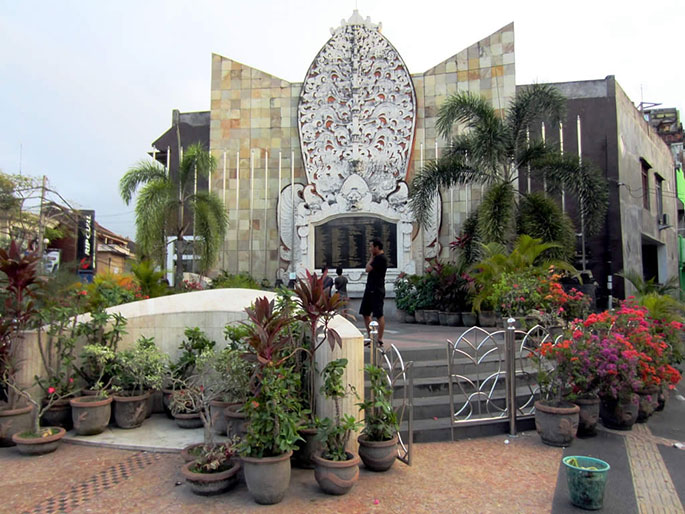
While the victims of the 2002 Bali bombings came from more than 20 countries, Australia suffered the largest loss with 88 fatalities.
Targeting busy tourist hotspots, suicide bombers detonated bombs at Paddy’s Bar and the Sari Club, two nightclubs in Kuta frequented by foreigners. Another bomb was remotely detonated in front of the American consulate in nearby Denpasar.
More than 30 people were eventually arrested for their involvement in the attacks.
Australia’s response
In the wake of the attacks, the Australian Defence Force immediately mobilised and, just 17 hours after the blast, the first RAAF plane arrived to evacuate injured Australians. In the largest aero-medical evacuation since the Vietnam War, at least 66 badly injured people were flown to Darwin for treatment.
The military then assisted in secondary transfers of people from Darwin to medical centres around the country.
Hours after the attacks, the Australian Federal Police (AFP) also organised a team to go to Bali. It included disaster victim identification staff, forensic investigators, intelligence officers, administrators, security staff and IT and communications staff to assist the Indonesian National Police (INP) investigation.
Over 10 days AFP members also interviewed 7000 Australians about their experiences as they returned to Australia after the attacks.
The AFP was instrumental in identifying and returning victims to their families, and provided extensive investigative support that led to the capture of the perpetrators.
Out of the destruction of the bombings came many stories of ordinary people making extraordinary efforts to help those affected. People who were injured in the blasts stayed to assist others, and locals and foreigners went to the site to help. Tourists with medical skills worked with overwhelmed Indonesian medical staff at the bombsites and local hospitals.
Nearly 200 Australians later received formal recognition for their bravery and the assistance they provided both immediately and in the following months.
Moving forward
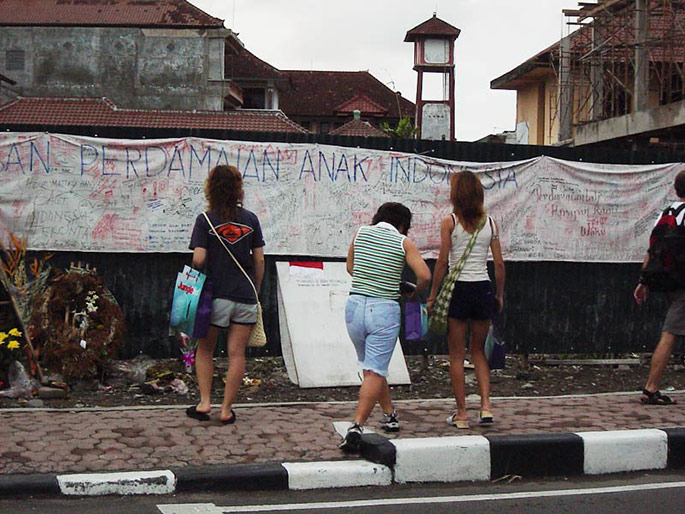
Since the bombings, a memorial to the 202 victims has been built on the original site of Paddy’s Bar. Each year, remembrance events are held there and around the world. Many of the survivors of the attacks have also shared their stories by publishing books about their experiences.
In 2012 on the tenth anniversary of the attacks, then Minister Chris Evans echoed the sentiment of many when he said:
They took many lives but they failed in their mission. October 12 2002 was also a day of great heroism. Of selfless acts of courage. Of remarkable emergency response. What was a terrible day of shared grief for Indonesia and Australia became a day of great shared resolve.
Australia maintains a close political relationship with Indonesia, and the AFP continues to work with the INP in many capacities, especially in combating terrorism.
Indonesia, and Bali in particular, remains a popular holiday destination for Australians.
Source: National Museum of Australia
To see other events that happened in Australian history, visit the blog site of Advance Institute of Business by clicking on this link.
Advance Institute of Business has nationally recogised Certificate and Diploma courses available to help you progress in your career.
The Certificate IV in TESOL will allow you to teach English in Australia and many other countries.

The 10773NAT Certificate IV in TESOL is a nationally and internationally recognised qualification that will allow you to teach English to speakers of other languages in Australia and many other countries.
The practical component can be done in your own country (conditions apply), Vietnam or Cambodia. If you choose to do the practical component in Vietnam or Cambodia, we will provide hotel accommodation at no extra cost.
We have the following Certificate and Diploma courses available for your career development:
Teaching Courses
Business
Leadership and Management
Entrepreneurship and New Business
- Certificate III in Entrepreneurship and New Business
- Certificate IV in Entrepreneurship and New Business
Accounting
We will soon also be offering:
- Advanced Diploma of Business
- Diploma of Human Resource Management
- Diploma of Marketing and Communication
And there will be more courses to come in the future.
Our non-accredited speciality courses:
- Career Paths (43 career paths to choose from)
- Corporate Training
- Business English
- English Tutoring
- University and College Tutoring
- Professional and Academic Writing Skills
- Where to Study in Australia
- Education Consultancy
25% discount on all courses for Centrelink and Veteran’s Affairs recipients.
All courses are nationally recognised through our Registered Training Organisation partner Skills Recognition International (RTO 32373). We also have an advisory service on where to study in Australia.
To find out more about these courses, please click this link to arrange a free video or phone call.
Discover more from Craig Hill
Subscribe to get the latest posts sent to your email.
 Craig Hill
One thought on “On this day (Australia): In 2002, eighty-eight Australians were killed in Bali in bombings committed by Jemaah Islamiyah”