

.
The Android Invasion is the fourth serial of Season 13 of Doctor Who, first broadcast in four weekly parts on BBC1 from 22 November to 13 December 1975. It was written by Terry Nation and directed by Barry Letts. It stars Tom Baker as the Fourth Doctor, Elisabeth Sladen as Sarah Jane Smith, Ian Marter as Harry Sullivan, John Levene as Sergeant Benton, Milton Johns as Guy Crayford, and Martin Friend as Styggron.
The Doctor and Sarah arrive in what looks like a quiet English village, but the pub is eerily staged, the money is new, and the locals behave like machines. They uncover a Kraal plot to invade Earth by sending android doubles of key people, led by the misguided astronaut Crayford.
Episode 1
The TARDIS lands in quiet English woodland. The Doctor and Sarah wander into the nearby village of Devesham and find it oddly wrong: the streets are empty, the pub is laid with fresh drinks and brand-new coins, the telephone is dead. A lorry rolls in and unloads villagers who stand motionless until a clock chimes, then suddenly “resume” life.
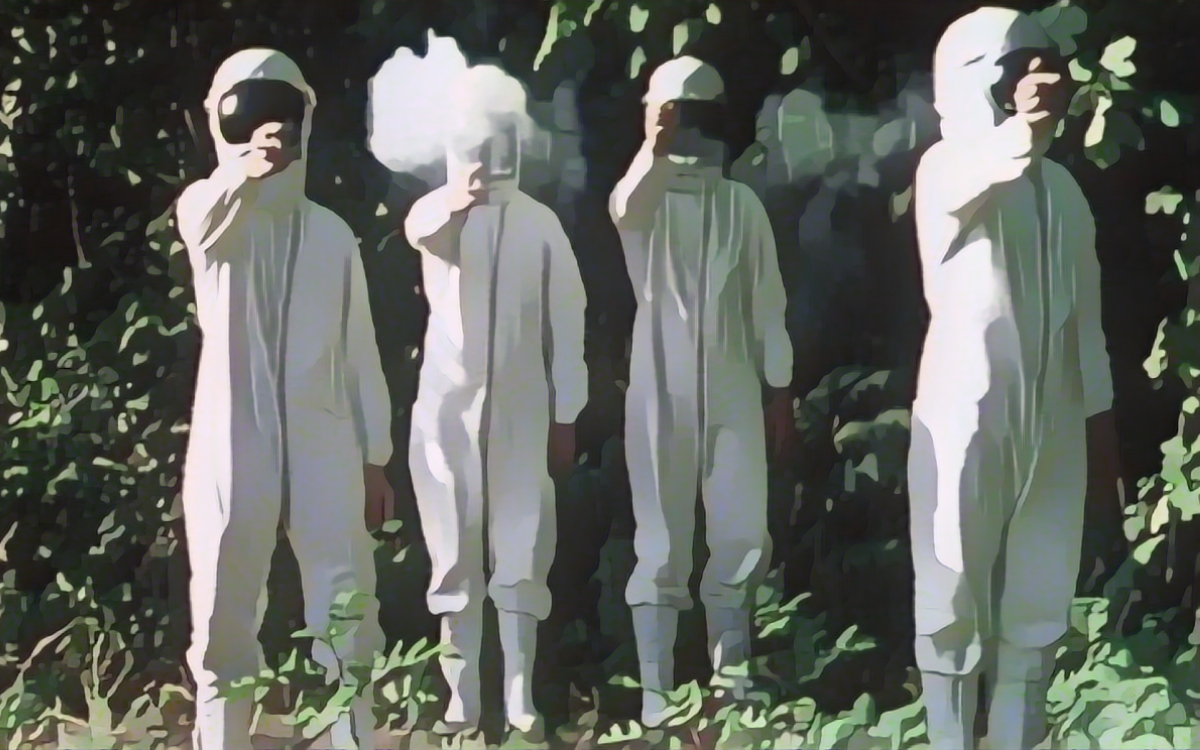
UNIT troops appear with blank faces and open fire. The pair dodge into the woods and spot a white-suited astronaut striding through the trees where no launch site exists. In the pub, a stuffed stag’s head hides a camera; in the fields, a hut conceals a lift to a sterile bunker pulsing with alien tones. The Doctor suspects they are walking through a rehearsal, not a real village, and that someone is programming impersonators.
They glimpse a control room where a leathery, tusked alien (Styggron of the Kraals) monitors their every move. He speaks of Earth as a prize and of a human ally named Crayford. UNIT soldiers and white-suited figures sweep the woods, herding the travellers toward open ground. The Doctor and Sarah run for the TARDIS: and find it is only a shell, a decoy in a training ground. The woods close in. The hunt tightens.
Episode 2
Dragged to the underground complex, the Doctor learns the truth: this “Devesham” sits on the Kraal world of Oseidon, built as a perfect copy to train an army of androids. Styggron boasts that Earth will fall to a plague and to duplicates of key personnel delivered by a human astronaut they “saved,” Guy Crayford.
The Doctor snipes at the logic of a man wearing an eye-patch for an eye that still works; Styggron ignores him and orders their dissection. Sarah slips her bonds, frees the Doctor, and they flee into the fake village where shop windows hide cameras and the pub floor triggers alarms. Android villagers converge with weapon grips rising from their wrists. The astronaut appears again, visor down, driving them toward the cliff road.
A hidden door leads back to the bunker and to rows of blank-eyed androids on racks: some already wearing familiar faces. The Doctor recognises UNIT uniforms among them and a replica of the TARDIS shell used for tests. He realises the invasion hinges on Crayford’s rocket; if they can board it, they might reach the real Earth first. Sirens blare. Guards close in. Sarah hurls a switch that plunges the corridors into darkness, and the pair sprint for the launch bay.
Episode 3
The Doctor and Sarah stow away aboard Crayford’s returning rocket and reach the real Space Defence Station near the genuine Devesham. The place is already compromised: calm, efficient personnel move with tiny, telling hesitations; a familiar UNIT face smiles without warmth.
Androids are activating across the base, following pre-programmed routes to seize communications and spread a Kraal virus. Crayford, convinced Earth abandoned him, coordinates the transfer of a cargo canister and the arrival of “inspectors” who are really duplicates. The Doctor tries to rally the few uninfected humans and sabotages the android control signal, but the enemy anticipates him. Sarah stays close, sharp and brave: until a small inconsistency chills him.
He tests her with a quick tug at her sleeve; beneath the cuff, plastic skin parts to reveal a cable. Sarah is an android copy, primed to kill him when ordered. He disables the double and races to find the real Sarah before Styggron triggers the final phase. In the rocket hangar, the Doctor confronts Crayford and sows doubt about the eye-patch lie. If the Kraals duped him once, they will discard him next. Security shutters slam. Android soldiers march. Somewhere below, Styggron arms the virus and turns toward London.
Episode 4
Crayford tears off the eye-patch and stares, stunned, at the truth. His faith fractures. He frees the real Sarah and tries to stop the transfer: then dies under Kraal fire as Styggron pushes the plan on. The Doctor scrambles the android guidance with a burst of frequencies and rewires the control beacon to loop orders back on themselves.
At the Defence Station, duplicates of officials and UNIT men freeze, then jerk into confusion as their programming clashes. Styggron drags Sarah to the medical wing and prepares to test the plague on her; the Doctor arrives with a counter-move, swapping the sample vials in the chaos. Styggron injects himself by mistake and staggers, armour smoking as his own virus consumes him. The android army collapses across the base like puppets with cut strings.
Outside, the night air is suddenly ordinary again: just wind in the trees and distant village lights. The Doctor explains to Colonel Faraday that Crayford’s ship carried death and impostors, but the signal is dead and the threat is over. In the Kraal bunker, consoles spark and die; on Oseidon, the mock village waits for a war that will never start. Sarah squeezes the Doctor’s arm, relieved. They slip back to the TARDIS and vanish into time.
Themes
As a paranoia thriller in country lanes, The Android Invasion delivers nimble suspense and a deliciously uncanny vibe: the kind of “something’s wrong with the village” tale Doctor Who rarely attempts this cleanly. It can’t touch the mythic charge of Pyramids of Mars or the operatic confidence of The Seeds of Doom, and it’s less baroque than The Brain of Morbius, but it races along more briskly than many Earthbound romps.
In the reckoning of Season 13, it sits as a lively lower-top-to-upper-mid-tier entry: inventive, pacey, and memorable for its doubling tricks, even if it never quite lodges in the pantheon alongside Genesis of the Daleks.
Continuity-wise, it stitches threads with care. The impostor syndrome echoes the body-snatcher tension of Terror of the Zygons and reaches back to infiltration tales like The Faceless Ones and Spearhead from Space, while the fake-UNIT gambit offers a sly farewell to that era’s trappings, giving Harry Sullivan and Sergeant Benton a final bow.
From here the TARDIS tilts hard into gothic science with The Brain of Morbius and the feral eco-horror of The Seeds of Doom, and the “who can you trust?” motif will resurface decades later in The Zygon Invasion/The Zygon Inversion. By its last reveal, The Android Invasion has done exactly what this golden run does best: link where we’ve been to where we’re going, with a shiver and a grin.

.
This is a chapter from Craig Hill’s book “Doctor Who – The Fourth Doctor”, chronicling every episode featuring the Fourth Doctor. It is available on Amazon.
.
To view the list of other Doctor Who serials, please click this link
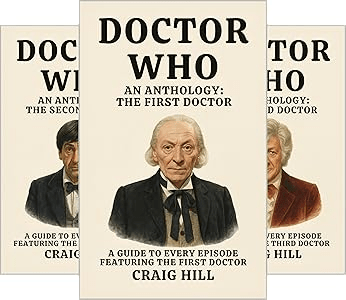
Doctor Who Episode Guides for Sale on Amazon
Step aboard the TARDIS and journey across the universe with every incarnation of The Doctor in this series of unofficial Doctor Who episode companions.
This collection of twelve books explores every televised adventure of the Time Lord’s lives.
Each volume in the series delves into a different Doctor’s era, offering detailed episode guides, behind-the-scenes insights, character profiles, and story synopses.
Once you have clicked the link, choose which book you want, and then whether you want to buy the Kindle (eBook) or Paperback versions.
Previews are available before you buy.
Visit the Australian Book and Language Studio
Discover more from Craig Hill
Subscribe to get the latest posts sent to your email.
 Craig Hill