

.
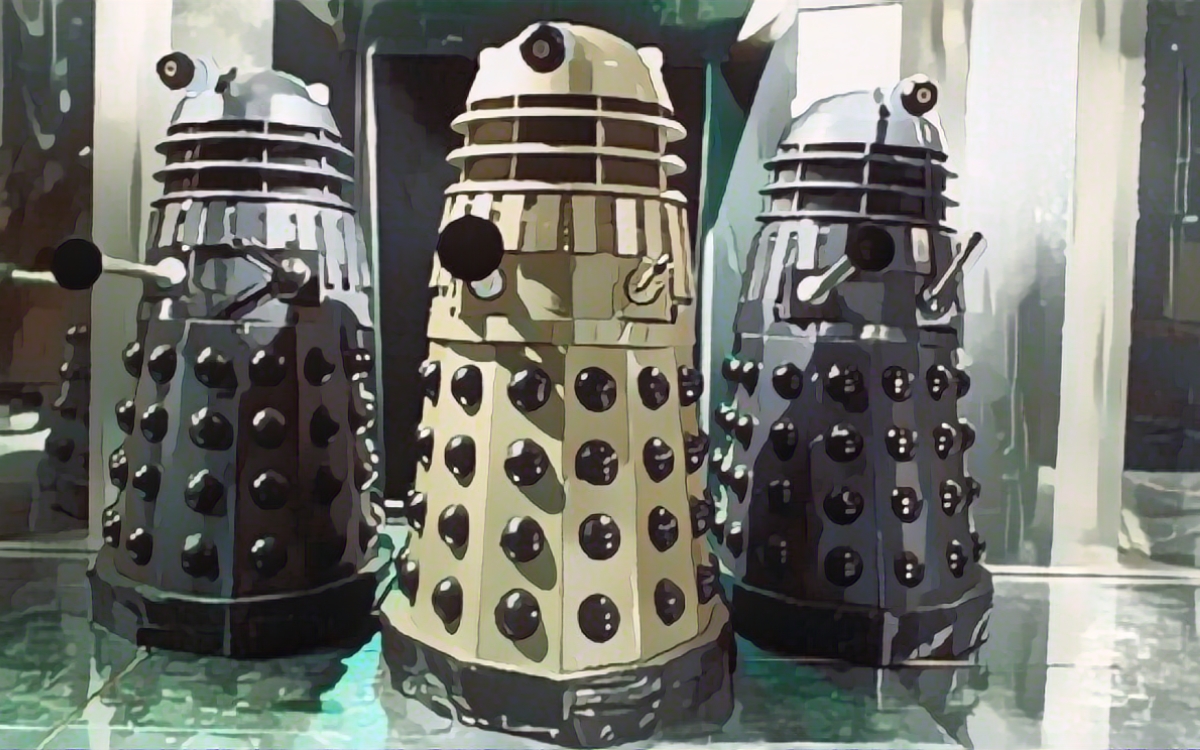
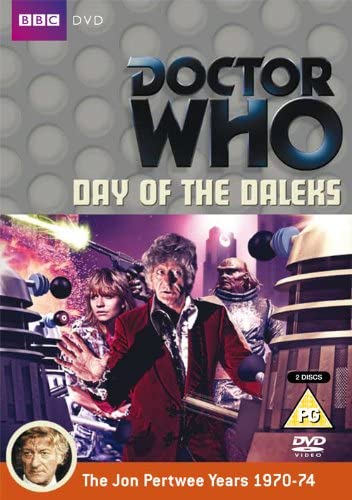
Day of the Daleks is the first serial of Doctor Who Season 9, originally broadcast in four episodes from 1 to 22 January 1972. It was written by Louis Marks and directed by Paul Bernard. It stars Jon Pertwee as the Third Doctor, Katy Manning as Jo Grant, and Nicholas Courtney as Brigadier Lethbridge-Stewart.
When political envoy Sir Reginald Styles is targeted by mysterious attackers who vanish into thin air, the Doctor and Jo uncover a time-travel plot tied to a bleak future where Daleks rule Earth with Ogron enforcers. Guerrillas from that future believe killing Styles will prevent a global war, but the Doctor sees a paradox forming and races to break the circle of cause and effect.
Episode 1
At Auderly House, Sir Reginald Styles rehearses a speech that could save a fractious world peace conference when a “ghost” appears in his study, levels a pistol: and vanishes. UNIT is called. The Brigadier posts guards while the Doctor prowls the wine cellar and finds odd scorch marks and a smell of ozone.
Jo Grant tries to calm a rattled Styles as rumours swirl that extremists plan to wreck the talks. That night the “ghosts” return: lean, desperate guerrillas who step out of thin air with a humming device. Their leader, Anat, insists Styles must die to prevent a future disaster. The Doctor stalls with questions about paradox and cause, but gunfire cracks outside: ape-like Ogrons crash through the garden, hired muscle for an unseen master.
In the chaos, one guerrilla, Shura, escapes with a satchel of explosives; another drops the time device as he’s stunned. The machine ticks, thrums, and spits a temporal shock that throws Jo across the floor. The Doctor realises these aren’t spectres but time travellers from an ugly future, and that someone is hunting them. When the house finally falls quiet, UNIT gathers prisoners, the cellar reeks of cordite, and the abandoned time device lies between worlds, still warm to the touch.
Episode 2
The Doctor stabilises the damaged time device in the cellar and, with Jo hovering, coaxes it to reveal coordinates not in space but in history. A slip, a hum: Jo blinks, reaches for it, and vanishes. The Doctor swears, locks settings, and follows. He stumbles into a stark 22nd-century Earth dominated by factories, patrols, and a velvet-voiced official known only as the Controller. Courteous and watchful, the Controller ushers the Doctor into an office with no corners and offers cooperation that tastes like threat.
Ogron guards stalk the corridors. In an inner chamber, the truth rolls forward on metal skirts: Daleks. They rule through human collaborators, mining Earth for their own war machine. The Doctor is interrogated in a mind analysis booth, images of the TARDIS and UNIT flickering across a screen, while Jo (captured trying to flee) refuses to betray him. Anat’s guerrillas spring a rescue; shots echo through steel halls as they sprint for a hideout among crumbling warehouses.
The Controller watches the escape with a strained smile, then orders pursuit. The guerrillas tell their story: a bomb at Auderly House destroyed the conference, fed chaos, and let the Daleks invade. Their mission is simple and terrible: kill Styles, avert the bomb, save the world.
Episode 3
The Doctor challenges the narrative. If the guerrillas’ bomb never explodes, how did the conference die? He dissects dates and witness fragments until a colder possibility emerges: what if the explosion everyone blamed on Styles was actually the guerrillas’ own device: detonated by a comrade left behind?
A predestination loop is strangling history. The Controller, anxious to keep his masters satisfied while nursing a sliver of conscience, tracks the fugitives to their lair and unleashes Ogrons and Daleks in a brutal raid. Boaz dies holding a doorway; Anat drags Jo to safety; the Doctor is cornered and bluffs with a stolen Ogron blaster long enough to trigger the damaged time machine. They tumble back into the Auderly cellar moments after their departure.
Upstairs, Styles prepares to host the first delegates, unaware that Shura has slipped onto the grounds with dalekium and despair. UNIT braces for a renewed attack. The Doctor runs room to room warning of a paradox no one believes, then finds Shura’s telltale wiring under the study floor and rips it out, convinced the man will try again. In the Controller’s future office, alarms sound: the Daleks have seen the temporal deviation and decide on a simpler answer: send a strike force to 20th-century Auderly and exterminate everyone.
Episode 4
Time corridors open like wounds and Daleks roll into the gardens of Auderly House as diplomats arrive in nervous convoys. The Brigadier throws a cordon; UNIT rifles rattle; Ogrons crash through hedges; the Doctor yells for Styles to evacuate the delegates immediately, not for safety alone but to break the loop. Styles hesitates, then obeys, shepherding envoys to the back drive.
Inside, Jo finds Shura in the cellar, hands shaking over wired dalekium. He believes detonation will “save history.” She tells him the truth: his bomb is the history, the spark the Daleks exploited. Upstairs, the Controller steps from a temporal shimmer, for once acting against his masters, and buys seconds by misleading the strike force. The Doctor seizes the gap, hauls Jo clear, and orders a general retreat from the house. Daleks breach the doorway. Shura meets the Doctor’s eyes, understands, and stays.
When the last diplomat clears the gate, the cellar erupts. Daleks and Ogrons vanish in a white roar; Auderly is shattered; the delegates live; the conference goes on. The future flexes, different. Back in the 22nd century, a factory siren falters and dies. The Controller pays for his choice; the Doctor salutes a complicated man. Jo squeezes his arm. For once, the day was saved by unmaking it.
Themes
As a Season 9 opener, Day of the Daleks is a taut, idea-driven thriller: smaller in scale than Inferno or The Dæmons, but sharper than its reputation suggests. Its predestination-paradox spine and political intrigue place it close to The Ambassadors of Death and Doctor Who and the Silurians for adult bite, while the UNIT action keeps the pulse high.
As a Dalek showcase it’s less operatic than Genesis of the Daleks or Remembrance of the Daleks, yet its economy, atmosphere, and nervy momentum make it a solid upper-mid-tier story that quietly shapes what follows.
Linking past and future, it draws on the series’ long Dalek memory (from The Daleks and The Dalek Invasion of Earth) then points straight ahead to the Ogrons’ return and Earth-space politics in Frontier in Space, and the jungle war that follows in Planet of the Daleks. Its time-loop morality tale prefigures later timeline knot-tying in Invasion of the Dinosaurs, The Two Doctors, and, in the revived era, Father’s Day and Turn Left.
Sitting between The Dæmons and The Curse of Peladon, it proves the UNIT years can juggle espionage, philosophy, and monsters – and shows the Third Doctor thinking his way out of annihilation as surely as he ever fought it.
.
This is a chapter from Craig Hill’s book “Doctor Who – The Third Doctor”, chronicling every episode featuring the Third Doctor. It is available on Amazon.
.
To view the list of other Doctor Who serials, please click this link
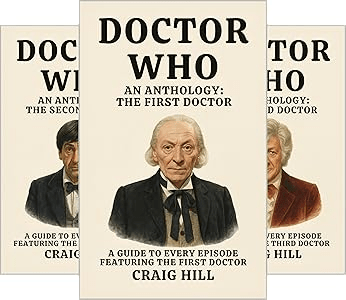
Doctor Who Episode Guides for Sale on Amazon
Step aboard the TARDIS and journey across the universe with every incarnation of The Doctor in this series of unofficial Doctor Who episode companions.
This collection of twelve books explores every televised adventure of the Time Lord’s lives.
Each volume in the series delves into a different Doctor’s era, offering detailed episode guides, behind-the-scenes insights, character profiles, and story synopses.
Once you have clicked the link, choose which book you want, and then whether you want to buy the Kindle (eBook) or Paperback versions.
Previews are available before you buy.
Visit the Australian Book and Language Studio
Discover more from Craig Hill
Subscribe to get the latest posts sent to your email.
 Craig Hill