

.
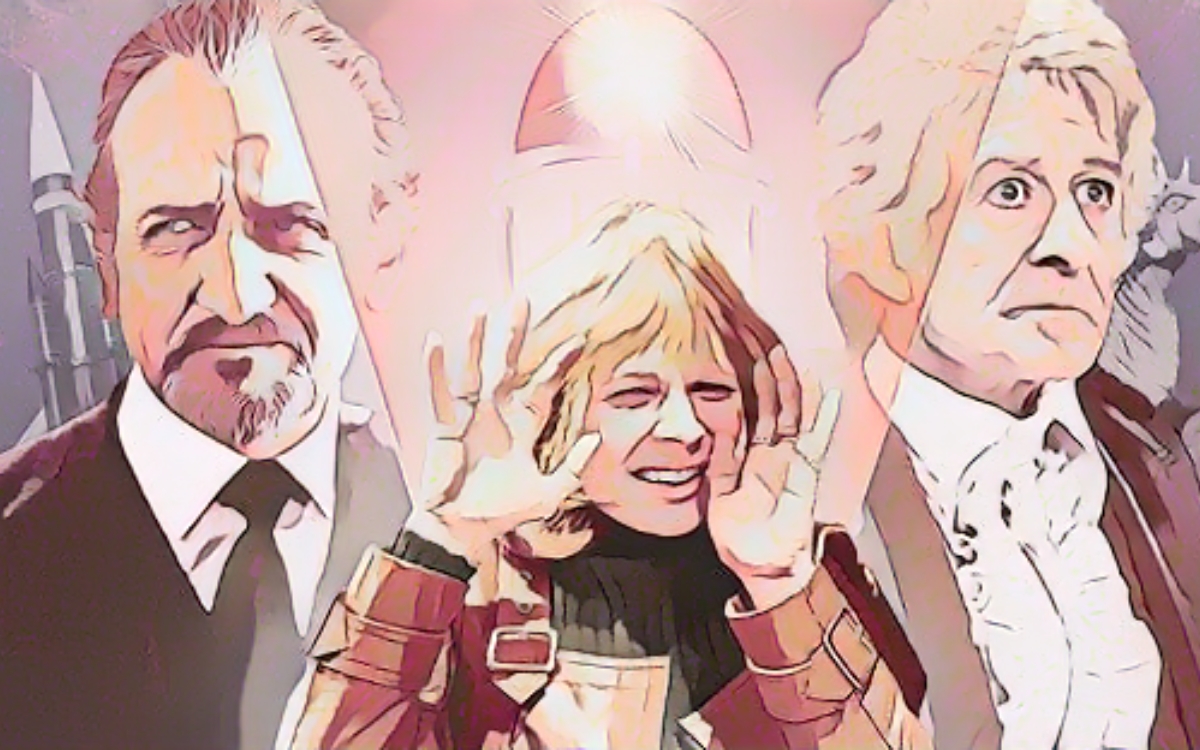
The Mind of Evil is the second serial of Doctor Who Season 8, originally broadcast in six weekly parts on BBC1 from 30 January to 6 March 1971. It was written by Don Houghton and directed by Timothy Combe. It stars Jon Pertwee as the Third Doctor, Katy Manning as Jo Grant, Nicholas Courtney as Brigadier Lethbridge-Stewart, and Roger Delgado as the Master.
At Stangmoor Prison a new “Keller Machine” that claims to remove criminal impulses causes terrifying deaths, while UNIT struggles to protect a World Peace Conference and a powerful missile from shadowy threats. The Doctor suspects an alien mind parasite and uncovers the Master’s plan to spread fear and spark international disaster.
Episode 1
A world peace conference opens in London under heavy UNIT protection as tempers run high between rival delegations. At Stangmoor Prison, the Doctor and Jo observe a new process demonstrated by Professor Kettering: the Keller Machine, invented by the elusive “Emil Keller,” promises to remove criminal impulses from the mind. The first subject, prisoner Barnham, convulses, survives, and wakes unnervingly gentle, his violent streak gone.
The Doctor is not impressed; the machine radiates a strange psychic field that feels hungry. Soon after, Kettering is found dead, seemingly terrified to death by visions only he could see. In the city, Chinese attaché Captain Chin Lee suffers blackouts near the conference and is left with a whisper in her mind that isn’t hers. The Doctor deduces the Keller device doesn’t erase evil; it extracts it and stores it as a parasitic intelligence that feeds on fear.
Reports link “Keller” to a string of suspicious shipments and secret visits. The Brigadier tightens security at both the prison and the conference, but pressure mounts as another diplomat collapses amid hallucinations. Jo sees a familiar bearded stranger in the Stangmoor corridors, charming the governor. The Doctor hears the name behind the alias and goes cold: Keller is the Master.
Episode 2
The Master deepens his hold on Stangmoor, playing genial consultant while quietly pulling keys and codes from the governor. The Keller Machine amplifies, lashing out at anyone nearby with tailor-made nightmares: fire for pyrophobes, drowning for claustrophobes, the throb of engines for the Doctor. Barnham, changed by the procedure, alone seems oddly calm near the device.
At the conference, Chin Lee, in a trance, unleashes a psychic attack on a delegate: an international incident engineered to wreck the talks. The Doctor follows the signal back to Stangmoor and finds the machine’s circuitry altered to transmit as well as feed. He argues to shut the project down; the governor hesitates, and Major Mailer, a hard-eyed inmate with a talent for manipulation, senses opportunity. Jo, piecing together staff movements, discovers a hidden communications room and a roster of unexplained visitors.
The Brigadier juggles diplomacy and containment, posting guards at every door while politicians demand a quick, tidy resolution. The Master quietly tests the prison’s response times with staged scuffles and laughs at the answers. The Doctor sketches a containment idea using Barnham as a living buffer, but the Master gets there first, turning a scheduled demonstration into an ambush. Sirens wail, gates slam, and the balance of power flips.
Episode 3
Mailer leads a full-scale riot under the Master’s direction. Warders are disarmed, the governor cowed, and Stangmoor becomes a fortress pointed at London. The Master reveals his broader plan with theatrical relish: the British Army is transporting “Thunderbolt,” a nerve-gas missile, for decommissioning.
With the prison as his base and the Keller Machine as both weapon and shield, he will seize Thunderbolt and hold the peace conference (and the government) hostage. Jo is taken prisoner and shoved into a cell block now patrolled by inmates with stolen rifles. The Doctor bargains for access to the machine, diagnosing the parasite as growing less controllable the more fear it consumes. Barnham’s placid presence quiets it, confirming the Doctor’s hunch. Across town, the Brigadier works up an assault plan that won’t spark a massacre, while Captain Chin Lee, released from the Master’s influence, stammers out enough truth to link Keller, Stangmoor, and the conference attacks.
Inside, the Master plays factions against each other, giving Mailer just enough power to feel dangerous, never enough to be indispensable. He orders the machine moved to a central hall and starts rehearsing a broadcast. The prison yard fills with trucks and stolen uniforms. Thunderbolt’s convoy is due at dawn.
Episode 4
At first light, the Master springs the trap. Disguised men from Stangmoor intercept the Thunderbolt convoy, overwhelm its escort, and drive the nerve-gas missile back toward the prison under a stolen banner. UNIT scrambles, chasing a handful of decoys while the real prize rolls through back roads. The Doctor, forced to assist, sabotages control circuits where he can and keeps Barnham close, using his calming field to approach the machine without collapse.
Jo wins over a frightened warder, slips messages through vents, and maps weak points in Mailer’s defences. The parasite surges whenever panic spikes, sending waves of terror that drop guards and prisoners alike; lights strobe, pipes bang, the building seems to breathe. The Brigadier, now certain of the missile’s location, sets a perimeter and prepares a surgical strike. Inside, the Master gloats from a commandeered office, radioing threats to Whitehall and demanding global humiliation for the conference he hates.
The Doctor pleads: the machine will break its leash and kill them all, hostage-takers included. For a flicker, the Master looks uncertain: then doubles the stakes, placing Jo in front of the device to ensure cooperation. The Doctor steels himself. To save her, he must turn the parasite’s hunger against its master.
Episode 5
The Master orders the Doctor to arm Thunderbolt as a deterrent. Under watch, the Doctor “complies,” cross-wiring timers and relief valves to buy minutes later. In the cell block, Jo spark-plugs a quiet uprising, shepherding guards and decent inmates to barricades while avoiding Mailer’s patrols. The Keller Machine howls, projecting raw nightmares through Stangmoor; a guard dies seeing flames in cold air.
The Doctor realises the parasite is evolving from stored evil into free-roaming malice and will soon ignore commands. He puts Barnham between it and everyone else, and the room settles like a soothed animal. That gives him a method: move the machine under Barnham’s protection and starve it of fear. The Master, furious, executes a backup plan: drive Thunderbolt to the peace conference and trigger panic on live television.
UNIT storms the outer gates under smoke and stun-grenades; the Brigadier pushes a spearhead toward the yard. Mailer, cornered, turns his gun on Jo; she grabs his wrist and holds on long enough for a guard to strike. The Doctor and Barnham wrestle the machine onto a trolley and aim for a loading bay. Outside, a captured lorry coughs to life. It’s a race: missile vs. reason, chaos vs. a man with no evil left in him.
Episode 6
The endgame snaps into motion. The Master drives for the city with Thunderbolt and a skeleton escort; UNIT roadblocks funnel him into an abandoned industrial estate where squads wait behind concrete and wire. At Stangmoor, the Brigadier clears building by building while the Doctor and Barnham wheel the shuddering machine toward open air, its attacks weakening in Barnham’s shadow.
Mailer makes one last play and goes down. The Master, boxed in, opens his broadcast to the world: only to find the Doctor on his frequency, cool and precise, explaining that the parasite will feed on the terror he’s creating and turn on its keeper. A heartbeat of doubt costs the Master the initiative. UNIT swarms the truck, the Brigadier disarms the missile, and engineers flood the warhead casing with neutralising compound.
Back at the prison, the parasite lashes out in a final, killing storm. Barnham steps forward without hesitation and smothers its reach long enough for the Doctor to cut power and seal the core. The machine falls silent. Barnham slumps, spent: his quiet courage the hinge of the day. The Master slips away in the confusion, promising a next time. The peace conference resumes, chastened but intact. The Doctor stands by the empty trolley, grateful and sad.
Themes
Measured against its neighbours, The Mind of Evil is the season’s grown-up cold-war thriller: leaner and grittier than Terror of the Autons, closer in mood to The Ambassadors of Death, and only a shade below Inferno and The Dæmons for sheer impact. The Stangmoor Prison siege and the peace-conference sabotage give UNIT its most convincing “real world” canvas, while the Keller Machine twists the show’s science-fiction into something unnervingly human.
If it lacks the flamboyance of later Master romps, its taut pace, stunt work, and moral edge make it one of the Third Doctor era’s most underrated high points.
As the second step in Season 8’s Master arc, it takes the rivalry born in Terror of the Autons and turns it into a full-blown chess match, setting rhythms that carry through The Claws of Axos, Colony in Space, and the finale in The Dæmons.
Its mix of politics, paranoia, and institutional failure echoes back to The Ambassadors of Death and forward to the ecological reckoning of The Green Death. Jo Grant and the Brigadier both sharpen here: their paths pointing to later growth and hard choices The Master’s talent for weaponising fear anticipates darker returns in The Sea Devils, The Time Monster, and far beyond to The Deadly Assassin.

.
This is a chapter from Craig Hill’s book “Doctor Who – The Third Doctor”, chronicling every episode featuring the Third Doctor. It is available on Amazon.
.
To view the list of other Doctor Who serials, please click this link
Doctor Who Episode Guides for Sale on Amazon
Step aboard the TARDIS and journey across the universe with every incarnation of The Doctor in this series of unofficial Doctor Who episode companions.
This collection of twelve books explores every televised adventure of the Time Lord’s lives.
Each volume in the series delves into a different Doctor’s era, offering detailed episode guides, behind-the-scenes insights, character profiles, and story synopses.
Once you have clicked the link, choose which book you want, and then whether you want to buy the Kindle (eBook) or Paperback versions.
Previews are available before you buy.

Visit the Australian Book and Language Studio
Discover more from Craig Hill
Subscribe to get the latest posts sent to your email.
 Craig Hill