

.
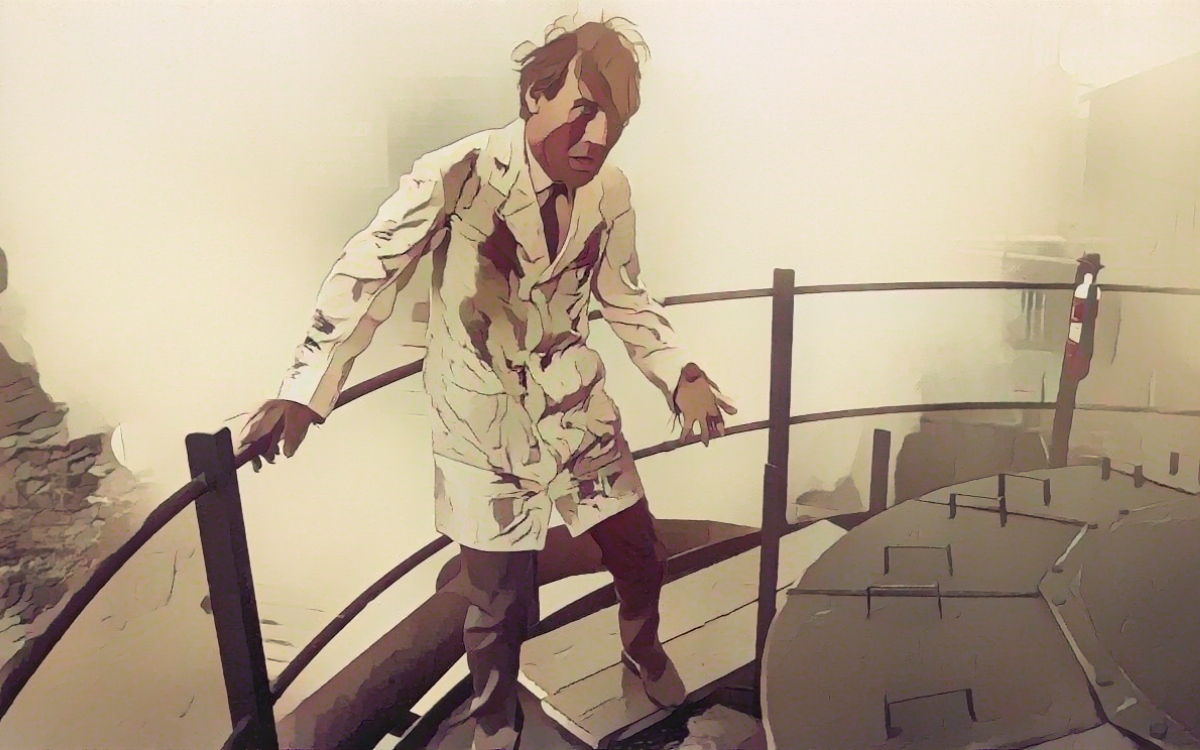
Inferno is the final serial of Doctor Who Season 7, originally broadcast in seven weekly parts on BBC1 from 9 May to 20 June 1970. It was written by Don Houghton and directed by Douglas Camfield. It stars Jon Pertwee as the Third Doctor, Caroline John as Liz Shaw, and Nicholas Courtney as Brigadier Lethbridge-Stewart.
At a secret drilling project meant to tap power from deep within the Earth, strange green infections and rising temperatures warn of disaster, while the Doctor experiments with his TARDIS console and is thrown into a harsh parallel world where the same project races toward catastrophe. Caught between two realities, the Doctor struggles to stop Professor Stahlman’s obsession before both Earths are doomed, and Liz and the Brigadier must weigh science against safety. This tense story mixes industrial danger with science fiction ideas, showing the Doctor’s courage under pressure and the high cost of ignoring warnings.
Episode 1
On Wenley Moor’s sister project, the Inferno drill roars day and night, chasing Professor Stahlman’s dream of punching through the Earth’s crust. The Doctor piggybacks the project’s nuclear output to tinker with his exiled TARDIS console while Liz Shaw monitors safety readings. Sir Keith Gold worries about pace and procedure; Stahlman brushes him off and overrules the computer’s warnings.
Down on the rig floor, a sticky green ooze seeps from a jammed pipe. Technician Slocum touches it, shudders, and staggers away changed: skin feverish, strength unnatural, eyes dull with rage. He kills without hesitation and seems impervious to heat. The Brigadier locks the site down as UNIT hunts the attacker through catwalks and shadowed pump rooms. The Doctor’s console flickers and briefly phases him out of the lab (there and not there) before dumping him back with scorch marks and a wild grin.
Meanwhile, Greg Sutton, a plain-spoken drilling expert brought in to advise, clashes with Stahlman and finds an ally in Petra Williams, the project’s capable deputy. Slocum finally collapses after a firefight, his body scalding to the touch and crusted with green crystals. The computer screams a fresh alarm as “penetration rate” surges. The Doctor frowns at the graphs. Something beneath them is waking up angry.
Episode 2
Stahlman pushes the throttle harder, pulling safety rods and bypassing interlocks. The computer predicts catastrophe; Stahlman calls it “hysterical.” Sir Keith sets off for Whitehall to demand a shutdown. He never arrives. His car is forced off the road, and word filters back that he’s “indisposed.” In the lab, the Doctor stabilises the TARDIS console enough to create a controlled time-space hop. Liz warns him not to try it inside a volatile reactor complex; he promises caution and immediately does the opposite.
On the rig, another worker brushes the green slime and twists into a snarling, heat-proof brute. UNIT containment teams are mauled; the Doctor discovers the creatures weaken in cold air and orders coolant hosed across the gantries to drive them back. Greg and Petra compare notes and realise Stahlman has secretly swapped crucial core samples and disabled alarms.
When Liz pulls the project logs, timestamps don’t match, and surveillance footage has gaps. The Doctor throws the master switch on his console and vanishes in a thunderclap, leaving scorch marks on the floor. At that same instant, the “penetration” gauge leaps toward the red. Petra appeals to Stahlman to pause; he snaps, eyes glittering, fingers stained a tell-tale green. Something more than ambition owns him now.
Episode 3
The Doctor rematerialises into the same lab: but the posters are different, the uniforms darker, the flags unfamiliar. He has slipped sideways into a parallel Britain ruled by a hard, smiling authority. The Brigadier’s face greets him wearing an eye patch and the title “Brigade Leader.” Liz Shaw is a cool, armed Section Leader. Benton is a brutal enforcer.
Here, Inferno advances even faster, and dissent disappears into locked rooms. The Doctor is interrogated as a suspected saboteur and thrown into a cell with Greg Sutton, who is just bold enough to listen. He pleads for access to the control room, warning that breaching the crust will unleash forces no one can control. Petra, under pressure from the Brigade Leader, still hears the science in his voice and allows him a look.
He recognises familiar arrogance in this Stahlman: and the same green taint at the cuticle. Down on the drill floor, more men mutate into howling, heat-hungry creatures, stripping insulation and climbing toward hotter pipes. Cooling lines are sabotaged. The countdown to zero-penetration begins under klaxons that never stop. The Doctor stares at the readouts and feels the floor thrum. If this world breaks the skin of the planet, there will be no stopping what comes up.
Episode 4
Warnings become reality. The drill hits “penetration zero,” and the complex convulses. Red vapour belches from vents, instruments fry, and the first seismic burst rolls across the moor. Outside, the sky bruises. Inside, Primords multiply, their claws and teeth no match for UNIT rifles; only cold buys seconds.
The Brigade Leader clings to procedure and sidearm; the Doctor hunts solutions. He rigs a coolant cascade to choke the drill head and buys a little time, but the planet answers with a deeper growl. Petra’s competence cracks as she watches colleagues transform; Greg steadies her and argues for a shutdown they can no longer enact. The computer, here rebranded and weaponised, loops a useless approval code while heat blisters the walls. The Doctor begs the parallel Liz to trust him, to choose science over doctrine.
She does, and together they fight their way to the lab, dodging creatures that steam in the chill. Through a smashed window, the Doctor sees the horizon glow. Volcanoes punch through cities in distant news feeds. This Earth is dying. With Liz and Greg’s help, he powers the console from emergency lines and tunes for home. The Brigade Leader tries to force him to take passengers. The Doctor vanishes as the roof comes down.
Episode 5
Back in his own lab, the Doctor reels, burned and furious. He has seen the endpoint: fire and ash. He orders an immediate shutdown. Stahlman refuses and locks the controls, accusing everyone of treachery. Sir Keith, alive after his “accident,” limps back with authority to suspend the project: but his papers will mean nothing if they cannot pry Stahlman off the console.
The Primord infection spreads again on the rig floor; Benton’s men fight a losing retreat, dragging coolant hoses like lifelines. Greg and Petra work on a bypass that will starve the drill of power without blowing the reactor. The Doctor hammers at the lab panel, rewiring in sparks, explaining as he goes so Liz can finish if he falls. Stahlman, sweating green, smashes gauges and howls that he will not be stopped on the brink of history.
The Doctor corners a transformed technician and proves, grimly, that deep cold can kill or stun the creatures. The Brigadier organises a freezing perimeter while Petra traces the last feed line they must cut. Sir Keith signs the shutdown order. Alarms climb another octave. The Doctor glances at the clock and then at the door to the drilling hall. They are not going to make it politely.
Episode 6
The complex becomes a maze of steaming corridors and white clouds of coolant. Petra and Greg, soaked and shivering, wrestle heavy breakers into place while Liz calculates the load they can dump without rupturing pipes. The Doctor fights through Primords with a crowbar and a plan: sealing off hot zones and routing cold air into the control core. Stahlman completes his metamorphosis, hair bristling, face feral, and bursts from the control room to lead his pack.
Sir Keith clears non-combatants as the Brigadier and Benton hold a line that bends and bends again. The bypass finally bites; the drill shudders, starving for power. For a moment, the gauges stabilise. Then a relay explodes, and everything goes dark except the red wash of emergency lights.
The Doctor drops into the main works, crosses a catwalk above a roaring shaft, and hauls himself to the manual crank that no one has touched since commissioning. He turns it inch by inch while Primords scrabble up the grills toward heat. Liz keeps time, voice shaking but exact. Greg arrives with a portable coolant lance and blasts a path clear. The drill head winds down, a grinding, wounded animal. One last lever remains, and the Doctor’s hands are bleeding.
Episode 7
It ends in the control room, breath fogging, floor slick with frost. The Doctor slams the final lever, and the drill dies with a long metallic sigh. Across the site, the temperature drop slows the Primords. Stahlman lunges; Greg sweeps the coolant lance and freezes him where he stands, a twisted statue rimed with ice.
Sir Keith stamps the shutdown; Petra tears off her headset and cries with relief she pretends is fury. The Brigadier orders a sweep, survivors bundled in blankets, heaters brought back one by one. Liz checks the instruments twice and finally allows herself a small smile. The crisis has passed seconds before the point of no return. In the quiet after alarms, the Doctor describes the world he left and the cost of not listening.
Even the Brigadier’s jokes land softly. Stahlman thaws only to crumble, the last proof of the thing that tried to wear him. Sir Keith promises an inquiry; Greg mutters that he’ll settle for a proper safety culture; Petra squeezes his hand. The Doctor, still smarting, tries another hop with his console, aiming for freedom: and reappears in a heap outside, covered in dustbins, to general amusement. He dusts himself off, grins despite himself, and asks for tea.
Themes
As a season finale and a stress test for the new Earth-bound format, Inferno is peak Season 7. It is bleak, propulsive, and unflinchingly adult. It matches Spearhead from Space for confidence, surpasses Doctor Who and the Silurians and The Ambassadors of Death for sustained tension, and stands beside later touchstones like The Dæmons and The Green Death as one of the Third Doctor era’s defining achievements. Few classic stories wield their scale and dread so well; fewer still give the Doctor so little room to win.
Its echoes run backward and forward through the series. The parallel-Earth nightmare anticipates the moral “what ifs” of Turn Left and the mirrored-world politics of Rise of the Cybermen/The Age of Steel and Doomsday, while its industrial hubris feeds straight into the ecological warnings of The Green Death.
Coming off the Doctor’s exile set in Spearhead from Space, it sharpens his frustration and distrust of authority, setting the tone for the confrontations of Terror of the Autons and, ultimately, the liberation promised in The Three Doctors. By showing a world that burns when no one listens, Inferno makes the UNIT years feel urgent—and the Doctor’s voice indispensable.

.
This is a chapter from Craig Hill’s book “Doctor Who – The Third Doctor”, chronicling every episode featuring the Third Doctor. It is available on Amazon.
.
To view the list of other Doctor Who serials, please click this link
Doctor Who Episode Guides for Sale on Amazon
Step aboard the TARDIS and journey across the universe with every incarnation of The Doctor in this series of unofficial Doctor Who episode companions.
This collection of twelve books explores every televised adventure of the Time Lord’s lives.
Each volume in the series delves into a different Doctor’s era, offering detailed episode guides, behind-the-scenes insights, character profiles, and story synopses.
Once you have clicked the link, choose which book you want, and then whether you want to buy the Kindle (eBook) or Paperback versions.
Previews are available before you buy.

Visit the Australian Book and Language Studio
Discover more from Craig Hill
Subscribe to get the latest posts sent to your email.
 Craig Hill