

.
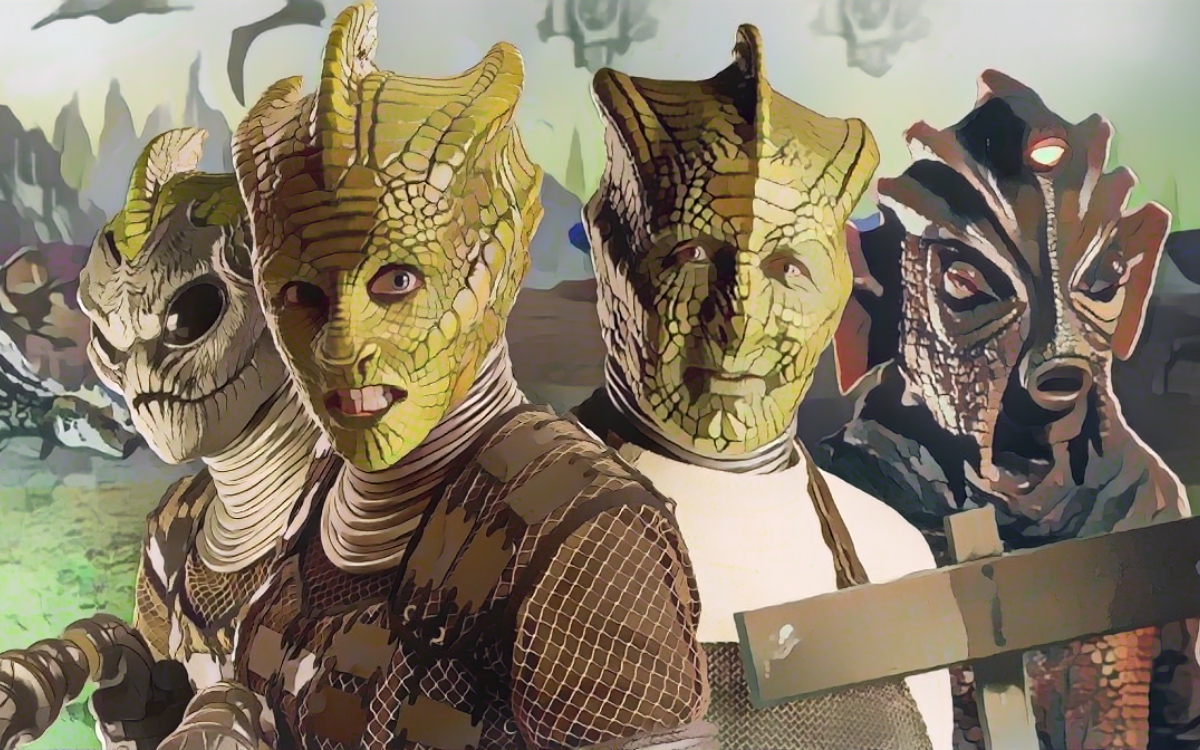
Doctor Who and the Silurians is a seven-part serial from Season 7 of Doctor Who, originally broadcast in seven weekly parts on BBC1 from 31 January to 14 March 1970. It was written by Malcolm Hulke and directed by Timothy Combe. It stars Jon Pertwee as the Third Doctor, Caroline John as Liz Shaw, and Nicholas Courtney as Brigadier Lethbridge-Stewart.
At a nuclear research centre in the caves of Wenley Moor, strange power losses and worker attacks lead UNIT to investigate, while the Doctor discovers an ancient reptile species awakening beneath the earth. The Doctor hopes for peace between humans and Silurians, but fear and mistrust grow on both sides, putting Liz and the Brigadier under pressure as events spiral toward a hard choice.
Episode 1
Deep beneath Wenley Moor, a new nuclear research centre keeps losing power, and frightened staff report seeing a monster in the caves. UNIT is called in. The Brigadier brings the Doctor and Liz Shaw, who quickly sense the problem isn’t mechanical. Director Lawrence bristles at interference, determined to keep his project on schedule and his reputation intact.
The Doctor explores the tunnels, finds ancient markings, and feels a low, rhythmic vibration pulsing through the rock, like a heartbeat. A technician who fled the caves babbles about a gigantic reptile, then collapses into a terrified silence. Another worker disappears. Security tightens, tempers fray, and the power drains worsen, threatening a reactor shutdown. The Doctor suspects something under the moor is drawing energy to wake itself up.
At night, a guard hears claws on stone and fires wildly into darkness. The Brigadier sends a patrol below; their radio crackles, then dies. Liz maps the power spikes and traces them to a sealed cavern. The Doctor squeezes through a fissure, torch beam cutting a pale circle, and glimpses something scaled slip out of sight. On the surface, a fresh tremor shudders the compound. The Doctor returns with a single conclusion: something old is waking.
Episode 2
The Doctor presses Lawrence to halt operations; Lawrence refuses and hands authority to security. Major Baker, fierce and suspicious, treats the centre like an enemy stronghold. The Doctor descends again, this time with equipment and a guide, and finds a carved door shape on the rock. Something has scraped at it recently from the inside. Further on, a lumbering shape bursts from the gloom: huge, reptilian, half-seen through dust. The party scatters; one man is injured, another vanishes.
Above, Liz analyses residues from the cave walls and finds traces unlike any known fauna. The Brigadier orders tighter UNIT control, but Baker pushes back, keen to prove himself. Meanwhile, Dr Quinn (cool, brilliant, and oddly evasive) keeps slipping away to the moor with a small electronic device. His assistant, Miss Dawson, begs him to stop whatever secret game he is playing. After dark, Quinn activates his gadget; deep below, something answers.
The power dips again and the reactor alarms scream. The Doctor argues that the drains are deliberate: someone, or something, is recharging. Lawrence denies the centre is in danger even as lights flicker and instruments die. In a silo corridor, a shadow glides past a CCTV lens, and a single three-fingered hand reaches for the door.
Episode 3
Quinn’s secrets start to unravel. The Doctor finds him nervous and triumphant by turns, complaining of mysterious “contacts” who promise knowledge. When the cave “dinosaur” attacks a UNIT patrol on the moor, the Doctor realises the creature is a guardian, not the true intelligence. He and Liz assemble a frequency scanner and pick up a signal pattern matching Quinn’s device.
Confronted, Quinn refuses to explain, driven by a hunger for discovery. That night, he summons his hidden allies and gets more than he bargained for. A reptile man steps from the shadows, sleek, intelligent, a third eye glinting. He is expecting the human to keep their bargain. Panic erupts; Quinn is mortally injured when his leverage fails. UNIT arrives to find Miss Dawson distraught and a wounded reptile fleeing into the dark.
The Doctor kneels beside Quinn, learning enough to confirm his theory: an ancient, technological reptile species has begun to revive. In the tunnels, the injured creature collapses and is captured by a nervous UNIT squad. The Brigadier wants it secured and questioned. Lawrence demands normality. The Doctor insists on compassion and science first. As dawn breaks, the prisoner opens one lidless eye, and the Doctor speaks softly, trying to bridge a gap of millions of years.
Episode 4
The Doctor studies the captive, piecing together a history from gestures, scans, and fragments: a civilisation that ruled the Earth before mammals, driven underground by cosmic catastrophe, sleeping in vast hibernation shelters. The creature calls itself Silurian (misnamed, perhaps, but proud) and fears the human reactor’s vibrations will wake its whole colony. Major Baker storms the sickbay to interrogate it and is blasted by a painful ray from the Silurian’s third eye. The reptile escapes into the caves.
The Doctor follows, hands raised, and is led before the Silurian elders. The old leader listens and considers coexistence; a younger militant argues that the apes have stolen their world. The Doctor offers a plan: phased revival, shared land, and scientific exchange. Back at the centre, Lawrence digs in, furious at military “hysteria,” his authority crumbling.
Miss Dawson, desperate, tries to continue Quinn’s arrangements and dies in a desperate standoff. The Brigadier prepares for a full sweep of the caves, but the Doctor begs for time to negotiate. In the colony halls, the power hum deepens as more chambers unlock. The young leader watches the Doctor leave and decides talk is a trap. If humans will not yield the planet, perhaps a weapon will make them.
Episode 5
People begin to sicken. A farmhand near the moor develops a raging fever and dies within hours. A driver who passed through the area collapses in a nearby town. Major Baker, wounded and humiliated, launches an unauthorised foray into the caves and staggers back infected. The Doctor returns from delicate talks to find Liz already tracing contagion chains and isolating a strange micro-organism. He realises the Silurians have released a plague to test humanity’s resistance: and to force surrender.
The Brigadier locks down the centre; Lawrence rails at “alarmism” and refuses to evacuate his staff. A senior official, Masters, arrives from London, picks up the pathogen during a tour, and unknowingly carries it away on the next train. Panic spreads as cases explode. The Doctor and Liz barricade themselves in the lab, racing to synthesise an antidote from Baker’s blood before he dies.
Vials clink, centrifuges whirr, UNIT soldiers roll up sleeves. A serum emerges, dangerously untested. The Brigadier gambles and orders mass distribution. In London, ambulances wail; in villages, doorways are chalked. Slowly, the death curve bends. Baker dies, but the cure works. Exhausted, the Doctor looks to the caves. If the plague was only the opening move, what will the next one be?
Episode 6
With the outbreak checked, the Doctor pushes for a settlement. He walks back into the colony and meets the elders under the watch of the militant commander who has now seized control. The old leader hesitates, then is deposed (perhaps killed) off-screen, his authority erased with a glance. The young Silurian dictates terms: the Doctor will adapt the research centre’s reactor to create conditions hostile to humans and favourable to reptiles.
Liz is seized as leverage; Lawrence’s last grip on order snaps and he dies at his desk, a lonely casualty of denial. Under guard, the Doctor studies Silurian schematics and pretends to cooperate, sketching equations with a borrowed stylus while swapping covert looks with Liz. He rigs a feedback path that will fry the Silurian device without melting the reactor, a hair-thin compromise between sabotage and catastrophe.
Above ground, the Brigadier plans an assault and worries about politicians. Below, the caves thrum as the machine spools up. The Doctor throws the switch. The colony’s lights flicker, the control tower spits sparks, and the militants realise they’ve been tricked. Chaos erupts. The dinosaur guardian is unleashed but flees the screaming field. Liz and the Doctor slip away toward the colony’s heart and one last gamble.
Episode 7
The Doctor returns to the elders’ chamber and pleads with the surviving moderates. The militant plan has failed; any further attack will bring annihilation. He proposes a different way: re-enter hibernation while he persuades the human government to revive and resettle them gradually, side by side, without fear. Wearily, the Silurians agree. The young commander tries a final veto but is outnumbered; he slinks into the shadows of the chamber.
The Doctor sets the wake-cycle for a delayed time and seals the doors, promising to come back with terms. On the surface, he tells the Brigadier he needs a chance to make the case for coexistence. The Brigadier listens, jaw set, eyes on the moor where his men have planted charges. Masters has died in London, and the country is furious. While the Doctor fetches equipment to begin talks, UNIT demolitions detonate.
The moor shudders; tunnels collapse; dust boils into the sky. The Doctor arrives too late and stares at the smoking hillside, stricken. Liz watches him, sharing the same bleak thought: science offered a bridge, and fear blew it up. The Brigadier calls it necessary. The Doctor calls it murder. The wind moves across Wenley Moor, and the Earth feels suddenly, terribly old.
Themes
As a statement of intent for the new Earth-bound format, Doctor Who and the Silurians is top-tier Season 7. It is complex, atmospheric, and morally demanding. It stands shoulder to shoulder with Spearhead from Space and Inferno, and it arguably surpasses many later UNIT tales for its adult tone and unsettling ambiguity.
The tension between scientific curiosity and military expedience gives it a stature comparable to later moral epics like Genesis of the Daleks, marking it as one of the Third Doctor era’s most thoughtful achievements.
Its ripples spread widely through the series’ past and future. Directly following Spearhead from Space, it cements the UNIT years and sets up consequences that echo into The Ambassadors of Death and Inferno.
The Silurian idea flowers again in The Sea Devils and returns tragically in Warriors of the Deep, then is reframed for the revived series in The Hungry Earth/Cold Blood, with further nods in stories featuring Madame Vastra such as A Good Man Goes to War and The Name of the Doctor. Even Dinosaurs on a Spaceship traces back to this serial’s core question: can humanity share its world, gracefully, with those who were here first?

.
This is a chapter from Craig Hill’s book “Doctor Who – The Third Doctor”, chronicling every episode featuring the Third Doctor. It is available on Amazon.
.
To view the list of other Doctor Who serials, please click this link
Doctor Who Episode Guides for Sale on Amazon
Step aboard the TARDIS and journey across the universe with every incarnation of The Doctor in this series of unofficial Doctor Who episode companions.
This collection of twelve books explores every televised adventure of the Time Lord’s lives.
Each volume in the series delves into a different Doctor’s era, offering detailed episode guides, behind-the-scenes insights, character profiles, and story synopses.
Once you have clicked the link, choose which book you want, and then whether you want to buy the Kindle (eBook) or Paperback versions.
Previews are available before you buy.

Visit the Australian Book and Language Studio
Discover more from Craig Hill
Subscribe to get the latest posts sent to your email.
 Craig Hill