

.
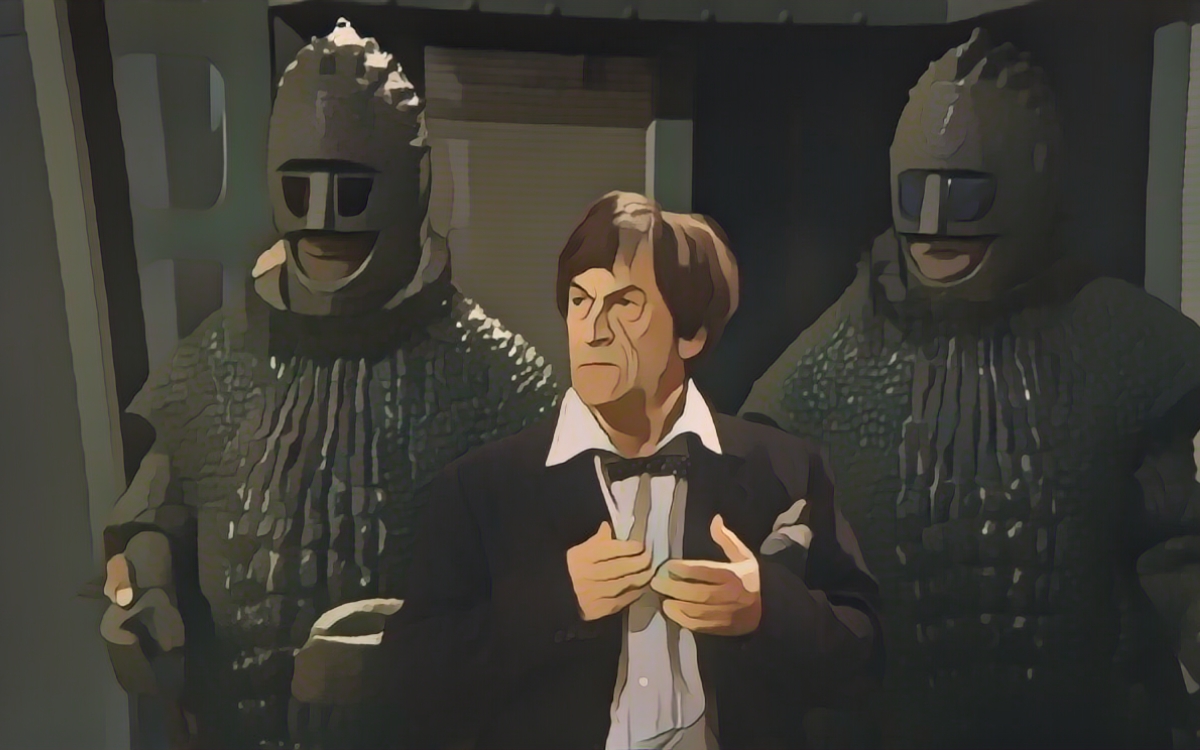
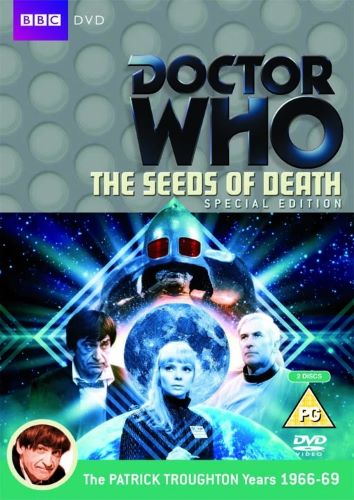
The Seeds of Death is the fifth serial of Season 6 of the classic Doctor Who series, originally broadcast in six weekly episodes from 25 January to 1 March 1969. It was written by Brian Hayles; directed by Michael Ferguson. It stars Patrick Troughton as the Doctor, Frazer Hines as Jamie McCrimmon, Wendy Padbury as Zoe Heriot, Ronald Leigh-Hunt as Controller Radnor, and Louise Pajo as Gia Kelly.
The TARDIS arrives on a future Earth that relies on the T-Mat teleport network, now sabotaged from the Moon by Ice Warriors who beam “seed” pods to flood cities with choking foam and change the air. The Doctor and friends use Eldred’s old rocket to reach the Moon, where Jamie fights Warriors in tight corridors and Zoe’s sharp calculations help restore control.
The story combines elements of space adventure, ecological terror, and technological overdependence. The serial explores themes of over-reliance on technology, climate disruption, and alien invasion, blending science fiction with action-adventure. It was one of the last Second Doctor serials before Patrick Troughton’s departure.
Episode 1
On a quiet morning, the world’s T-Mat teleport network hiccups and dies. Weather deliveries stall, food chains falter, and at Earth control Commander Radnor and systems ace Gia Kelly scramble for answers. The Doctor, Jamie, and Zoe arrive just as the emergency deepens. Radar shows the Moon relay has gone off-line; no one can T-Mat there to check.
An old pioneer, Professor Eldred, fumes that rockets would have prevented this dependence, and happens to have one mothballed. On the Moon, technician Fewsham buckles under the hissed orders of an occupying force: Ice Warriors led by the cold strategist Slaar. His colleague Phipps slips into a solar energy store and hides, watching in horror as Warriors force Fewsham to reactivate the system. Back on Earth, the Doctor recognises the sabotage pattern and volunteers to ride Eldred’s creaking rocket.
Kelly feeds guidance numbers; Eldred polishes dials with shaking pride. Liftoff punches them into a bruising ascent, everything rattling. Radnor fights to keep cities calm as T-Mat outages cascade. On the Moon, a lens turns; Slaar admires Earth through glass and speaks to the Grand Marshal far away. T-Mat is theirs; next comes occupation by stealth. In the cramped rocket, the Doctor pats the console and tells it kindly not to explode.
Episode 2
The rocket buckles through space and thumps into lunar dust. The Doctor and Jamie trek to the Moonbase through service shafts while Zoe monitors from the capsule. Inside, Phipps rigs sun-lamps into a lethal trap and vaporises a Warrior that finds his refuge. Slaar forces Fewsham to bring Earth control on line, smiling at his cowardice. When the Doctor slips into the complex, he and Jamie link up with Phipps and piece together the takeover: T-Mat seized, staff coerced, Earth blinded.
They try to raise Radnor with a makeshift transmitter, but a Warrior patrol forces a retreat through storage bays. Fewsham wavers under pressure, then buys seconds for the Doctor by “fumbling” a switch; Slaar’s grip tightens. Outside, Zoe times a sprint to the airlock and reunites with the others just as Warriors flood the corridor.
One dies under Phipps’s focused lamps; two more herd them away from the control bank. Slaar keeps Fewsham alive: he needs a human T-Mat hand for the next phase. On Earth, Kelly scrapes a partial link from Moon telemetry and hears one clear phrase: “Ice Warriors.” Eldred squares his shoulders at the vindication and asks what a man with rockets can do against a world already in enemy hands.
Episode 3
Under Slaar’s orders, Moonbase begins dispatching strange cargoes: smooth seed pods T-Matted to climate centres and distribution hubs around the globe. One lands in a country depot and swells with a steady pulse; when a technician prods it, it bursts into white foam that creeps and billows down corridors, sucking oxygen and smothering everything it touches.
Radnor orders evacuations; Kelly races to stabilise T-Mat paths so they can at least pull survivors out. On the Moon, the Doctor goes for the main panel and is hurled back by a Warrior’s sonic gun; Jamie drags him to cover while Zoe studies a pod schematic on a flickering monitor. Phipps slips to the solar store again to build a beacon to Earth. Fewsham, sweating, opens a channel and pleads for help, but Slaar stands just out of view, listening.
More pods go out to London, New York, Moscow; weather reports spike wildly as the foam alters air composition. The Doctor experiments on a cracked fragment that leaked during transit: heat makes it flare, cold slows it, and a drop of water makes it collapse to sludge. He files the last result away with a tight nod. Slaar, impatient, contacts the Grand Marshal. The first wave has begun; the fleet will follow the homing signal.
Episode 4
The Doctor has Kelly T-Mat him back to Earth with a damaged pod for tests. In a sealed lab he proves it: water disrupts the foam’s chemistry; a dousing reduces a roiling mass to harmless slurry. Radnor authorises a call to Weather Control to seed rain over threatened cities, but the smothering fog makes aircraft risky and T-Mat corridors flicker with interference.
The Doctor and Zoe dash to the bureau, charm a sceptical director, and crank cloud machines toward a thunderburst over London. On the Moon, Slaar promotes Fewsham to public mouthpiece and orders him to broadcast calm as more pods transit. Phipps traps another Warrior with solar lamps and transmits coordinates, getting a burst through before the line dies.
Rain hammers rooftops; foam collapses along gutters and stairwells, giving fire crews a chance to breathe. But Slaar is already pivoting. He activates a powerful navigation beacon; far away, the Grand Marshal’s fleet swings to its tone. Fewsham flinches, understanding at last what he has helped unleash. The Doctor looks up from Weather Control’s dials to the sky forecast. If they can’t silence that beacon, rain will only buy hours. He grips Jamie’s shoulder. They have to go back to the Moon.
Episode 5
T-Mat sputters back to life long enough to fling the Doctor and Jamie into the Moonbase power alcove. Phipps is gone (dead buying time) but his jury-rigs still stand. Fewsham meets them, wracked with guilt, and whispers that the beacon controls are in Slaar’s sightline. The Doctor sketches a gambit: set a delay, fake a demand from Earth, and flip the beacon to transmit a new course.
If it works, the invasion fleet will follow a perfect signal: straight into the Sun. On Earth, Zoe coordinates weather bursts with Kelly, keeping foam at bay while T-Mat relays cough and clear. Fewsham fakes a faulty link, draws Slaar in with a promise to “show Earth the power of Mars,” then yanks a hidden lever. The screen blooms with a warning burst that Radnor records; alarms shriek in the lunar control room.
Slaar turns his gun on Fewsham; the technician laughs once, free, and falls. The Doctor dives for the panel and throws the last switches. Outside, a gleam becomes a spear of light across the stars: the fleet answering the pull. Slaar realises too late; he orders every Warrior to the beacon. Jamie braces the door with a dead console while the Doctor hums under his breath and waits for celestial arithmetic to finish the job.
Episode 6
The homing tone sings its fatal note. Far away, the Grand Marshal’s armada banks obediently into the Sun and burns to ash. On Earth, rain finally sheets across the last foaming districts; the fungus gutters and dies in gutters and drains. Slaar storms the control room with his remaining Warriors. Jamie holds one with a jammed door; the Doctor lures another into the solar store.
He snaps the lamps to full: its armour boils, then slumps. Slaar corners them at the panel, hissing about revenge. A burst of T-Mat shimmer interrupts him: Kelly and a UNIT squad step through on the re-opened link. Blaster fire flashes; Slaar drops, defiant to the last. Radnor reports cities clearing, T-Mat stabilising, and a world waking from suffocation to rain-washed air. The Doctor kneels by Fewsham’s body a moment, then quietly unplugs the beacon.
Eldred arrives by T-Mat, grinning despite himself: rockets have had their day again. Kelly thanks the travellers with brisk warmth; Radnor offers future cooperation if the stars threaten once more. In the puddled streets below, children splash; the white residue runs to drains. Back in the TARDIS, Zoe admits she liked saving the world with weather. The Doctor sets new co-ordinates and listens to the engines purr like a pleased cat.
Themes
As a space-age siege, The Seeds of Death lands in the upper tier of Season 6. It is less monumental than The War Games and a notch below the urban sweep of The Invasion, but surer and more cinematic than The Krotons. As an Ice Warriors showcase it’s arguably tighter than their debut in The Ice Warriors, even if it lacks the courtly intrigue later found in The Curse of Peladon.
The Moon sequence, creeping foam, and the Doctor–Jamie–Zoe trio working at full tilt give it a cool, methodical momentum that sits comfortably beside The Web of Fear and The Tomb of the Cybermen for sheer atmosphere.
In the tapestry around it, it follows The Krotons and hands the baton to The Space Pirates, while deepening the Ice Warriors’ legacy that continues through The Monster of Peladon and into the modern era with Cold War and Empress of Mars. Its critique of overreliance on T-Mat teleports nods forward to later transmat tales like The Ark in Space and The Sontaran Experiment, and its Earth-under-siege rhythms echo back to The Moonbase and ahead to The Ambassadors of Death.
Even its “invasive nature” terror foreshadows the botanical apocalypse of The Seeds of Doom. In short, it’s a confident bridge, consolidating a classic foe while sketching the technological anxieties the series will keep exploring.
.
This is a chapter from Craig Hill’s book “Doctor Who – The Second Doctor”, chronicling every episode featuring the Second Doctor. It is available on Amazon.
.
To view the list of other Doctor Who serials, please click this link
Doctor Who Episode Guides for Sale on Amazon
Step aboard the TARDIS and journey across the universe with every incarnation of The Doctor in this series of unofficial Doctor Who episode companions.
This collection of twelve books explores every televised adventure of the Time Lord’s lives.
Each volume in the series delves into a different Doctor’s era, offering detailed episode guides, behind-the-scenes insights, character profiles, and story synopses.
Once you have clicked the link, choose which book you want, and then whether you want to buy the Kindle (eBook) or Paperback versions.
Previews are available before you buy.

Visit the Australian Book and Language Studio
Discover more from Craig Hill
Subscribe to get the latest posts sent to your email.
 Craig Hill