

.
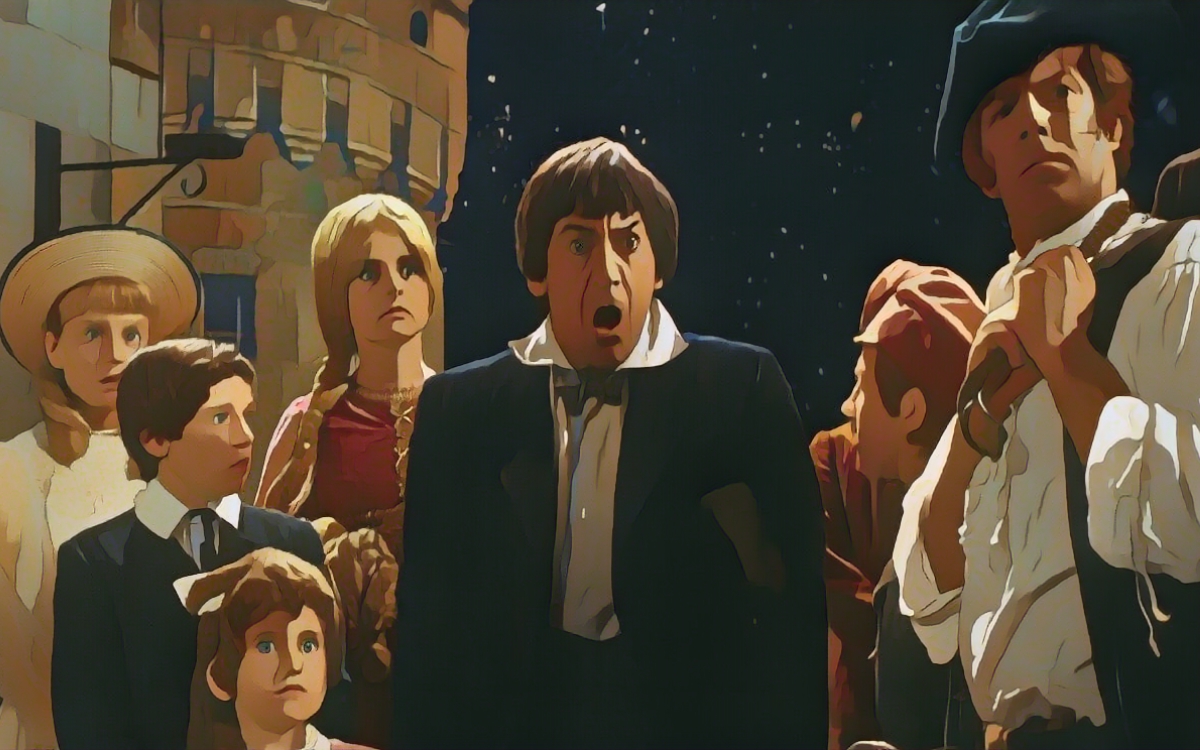
The Mind Robber is the second serial of Season 6 of the classic Doctor Who series. It was written by Peter Ling and directed by David Maloney Originally broadcast in five weekly episodes from 14 September to 12 October 1968. It was written by Peter Ling and directed by David Maloney it stars Patrick Troughton as the Doctor, Frazer Hines as Jamie McCrimmon, Wendy Padbury as Zoe Heriot, Emrys Jones as the Master of the Land of Fiction, and Bernard Horsfall as Gulliver.
The TARDIS escapes a lava flow and falls into a strange white void, leading the travellers into a land where stories and legends are real and words have power. The Doctor keeps calm as puzzles twist reality, Jamie’s face changes after a trap, and Zoe uses quick thinking to challenge a comic-book hero.
The Mind Robber is one of the most imaginative and surreal stories in classic Doctor Who, exploring the blurred line between fiction and reality. The story is notable for its surreal tone, metafictional setting, and clever manipulation of literary and fictional tropes. It stands out as one of the most imaginative and experimental stories of the classic series.
Episode 1
The TARDIS is trapped by a rising tide of lava and, with nowhere to go, the Doctor engages the emergency unit. Everything flips to white. No stars, no sound: just an endless void that swallows horizon and shadow. Strange whispers tease Jamie and Zoe with homely promises; an open TARDIS door shows Scotland to one, the Wheel to the other. The Doctor warns them not to step outside, not to believe.
A squad of tall, featureless White Robots arrives and advances with tranquil inevitability. The floor isn’t a floor at all but nothingness that pretends to be solid. A siren keens inside the ship; instruments spin to nonsense. In the confusion, Jamie and Zoe stray over the threshold and are swallowed by blankness. The Doctor follows and is lost in glare and silence.
A heartbeat later the TARDIS detonates like shattered glass: panels, shelves, and the police box itself bursting into fragments that hang in mid-air before drifting apart. Each of them finds a different piece of “somewhere”: a rock, a path that starts and stops, a door with no wall. The White Robots pace the nothing like wardens. The Doctor steadies himself and says the only defence here is disbelief. The void listens.
Episode 2
The nothing grows edges. A forest materialises where leaves are printed letters and tree trunks are sentences. A polite man in eighteenth-century dress steps from a path, introduces himself as Lemuel Gulliver, and answers every question with lines from his book. The Doctor takes note: fiction has weight here. Jamie blunders into a trap laid by two solemn children who set riddles and giggle; a picture of his face is torn up and he is turned into a lifeless cut-out.
The Doctor must reassemble the features like a jigsaw to restore him. He gets the eyes wrong at first, leaving Jamie with a different face. Clockwork soldiers clack out of a boxwood maze and herd them to a keep that appears only when looked at directly. Zoe, brilliant and impatient, tests the boundaries, making patterns in the letter-leaves to unlock a door.
The White Robots arrive and stand like chess pieces while a distant, measured voice approves the experiment. The trio flee through a museum hall where statues turn their heads; a Gorgon’s coils begin to stir. The Doctor refuses to believe in stone that moves and it freezes again. They push on into a corridor of blank pages that flutter with a draft from nowhere: and a pen scratches, writing them deeper.
Episode 3
The world edits itself. A beach blooms out of the whiteness; a Unicorn charges, horn low and eyes wild. The Doctor anchors the others and repeats, calmly, that none of it is real unless they give it reality. The beast dissolves into surf. Back in the forest, tinny drums lead battalions of toy soldiers to surround them, rifles ticking as they aim. The Doctor folds a paper command and the troops halt, trapped by their own rules.
A doorway opens onto a dark gallery where the Medusa glides, snakes whispering. Jamie nearly looks into her eyes; the Doctor forces him to stare at her reflection and the illusion evaporates into dusty cloth. Through it all Gulliver keeps reappearing, steering them away from danger by quoting voyages, as if he can only help within the lines he was written. At the centre of a hedge maze, a silver-clad figure (half comic-strip superhero, half bully) leaps for Zoe, calling himself the Karkus and demanding tribute.
She recognises him from futurist weeklies and realises power here is belief; the moment she stops believing, he weakens. With a brisk flip she sends him sprawling and claims his weapon. White Robots close in and usher the travellers up a slope to a towering, ink-black citadel.
Episode 4
Inside the citadel sits an old man at a console of reels and quills: the Master of the Land of Fiction, a children’s author kidnapped years ago and yoked to a great computer (“Master Brain”) that needs a human imagination to run its world. He is calm, tired, and certain. He wants the Doctor to take his place. The Master tempts him with perfect control: create plots, move armies, keep chaos out forever.
The Doctor refuses, and the white attendants separate the companions. Jamie and Zoe are sealed inside giant translucent “story cylinders,” their minds fed text that overwrites memory. The Doctor is given a pen and told to write. When he scribbles “the Doctor escapes,” blank warriors arrive to make it so, then glitch as opposing lines appear on the Master’s side. A battle of paragraphs begins. The Karkus returns, now meek; the Doctor recruits him alongside Gulliver.
Across the hall, the Master summons Sir Lancelot and Blackbeard; the Doctor counters with Cyrano and D’Artagnan. Characters clash, speak only in their own idioms, and cancel one another out. The Doctor inches toward the console, pretending to accept the chair. As the Master Brain’s pulse climbs, the old writer begs him softly: free me, or this place will take you instead.
Episode 5
The duel becomes a war of stories. The Master writes traps, labyrinths, obedient armies; the Doctor answers with riddles, blanks, and contradictions. Zoe and Jamie force their cylinders open from inside: Zoe by calculating stress points, Jamie by sheer cussed will. They then sprint to the machine. The Master, desperate, pours power into the Brain; the White Robots march like an assembly line toward the Doctor.
He throws down his pen and gambles everything on sabotage: “Zoe and Jamie climb into the control panel and press every button at once.” They do, clinging to the glowing banks as sparks spit. The Master Brain chokes on input it cannot reconcile and begins to overload. Fictional champions freeze mid-duel and crumble to paper; the White Robots halt, then topple like felled statues. The old writer slumps as the grip on his mind loosens.
Walls peel back to blank; the citadel sheds rooms like pages. In a blizzard of floating type, the Doctor hauls Jamie and Zoe clear and drags the Master to the floor. Everything un-writes itself. With a crash that isn’t a sound, the void lets go. The TARDIS reassembles around them, roundels thumping back into place. On a quiet scanner the author waves farewell from his desk. The Doctor sets a new course and closes the book.
Themes
As a leap into pure fantasy, The Mind Robber sits near the top of Season 6. It is far bolder and more coherent than The Dominators, if not as sweeping as The Invasion or as epochal as The War Games. Its stark white void, living-storybook logic, and the Doctor–Jamie–Zoe trio at full spark give it a crystalline, dreamlike charge rare in the classic run.
Measured against the Troughton era’s greats, it stands alongside The Web of Fear and The Tomb of the Cybermen for memorable imagery, while carving its own lane as the era’s most playful experiment. It’s a compact, confident triumph.
Linking past and future, it follows directly from The Dominators’ cliff-edge escape and drops the team onto the road to The Invasion, where the series pivots toward UNIT and a more grounded Earthbound style. Spiritually, it reaches back to the surreal games of The Celestial Toymaker and looks ahead to mindscapes and metafiction in The Deadly Assassin, The Ultimate Foe (from The Trial of a Time Lord), The Greatest Show in the Galaxy, and later echoes like The God Complex, The Doctor’s Wife, and It Takes You Away.
Its puzzles of identity and rewritten reality also converse with doubles and deceptions from The Enemy of the World. In that sense, The Mind Robber is a hinge between modes: proof that the series can be as strange as a fairy tale one week and, the next, stride confidently into spycraft and steel.

.
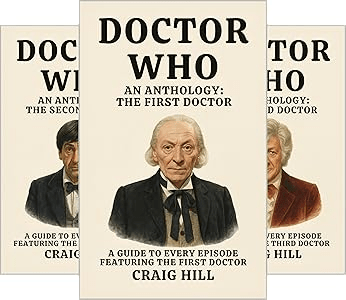
This is a chapter from Craig Hill’s book “Doctor Who – The Second Doctor”, chronicling every episode featuring the Second Doctor. It is available on Amazon.
.
To view the list of other Doctor Who serials, please click this link
Doctor Who Episode Guides for Sale on Amazon
Step aboard the TARDIS and journey across the universe with every incarnation of The Doctor in this series of unofficial Doctor Who episode companions.
This collection of twelve books explores every televised adventure of the Time Lord’s lives.
Each volume in the series delves into a different Doctor’s era, offering detailed episode guides, behind-the-scenes insights, character profiles, and story synopses.
Once you have clicked the link, choose which book you want, and then whether you want to buy the Kindle (eBook) or Paperback versions.
Previews are available before you buy.
Visit the Australian Book and Language Studio
Discover more from Craig Hill
Subscribe to get the latest posts sent to your email.
 Craig Hill