

.
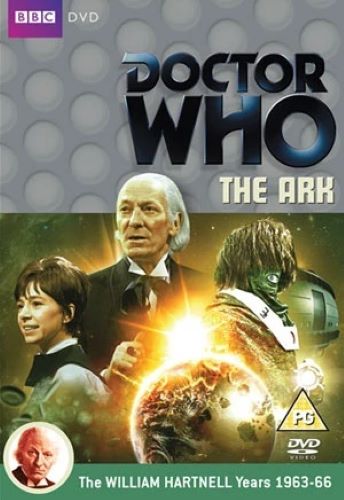
The Ark is the sixth serial of Season 3 of the classic Doctor Who series. It was originally broadcast in four weekly parts from 5 to 26 March 1966. It was written by Paul Erickson and Lesley Scott, and directed by Michael Imison. It stars William Hartnell as the Doctor, Peter Purves as Steven Taylor, and Jackie Lane as Dodo Chaplet.
On a vast spaceship carrying humanity and their alien partners, the Monoids, to a new world, the TARDIS arrives and Dodo’s innocent cold spreads among people who have no immunity, leading to fear, a trial, and a race for a cure; when the travellers return to the same ship centuries later, they find the Monoids now ruling and the Ark nearing its destination, where invisible Refusians force both sides to confront pride, power, and the need to share their future.
Episode 1: The Steel Sky
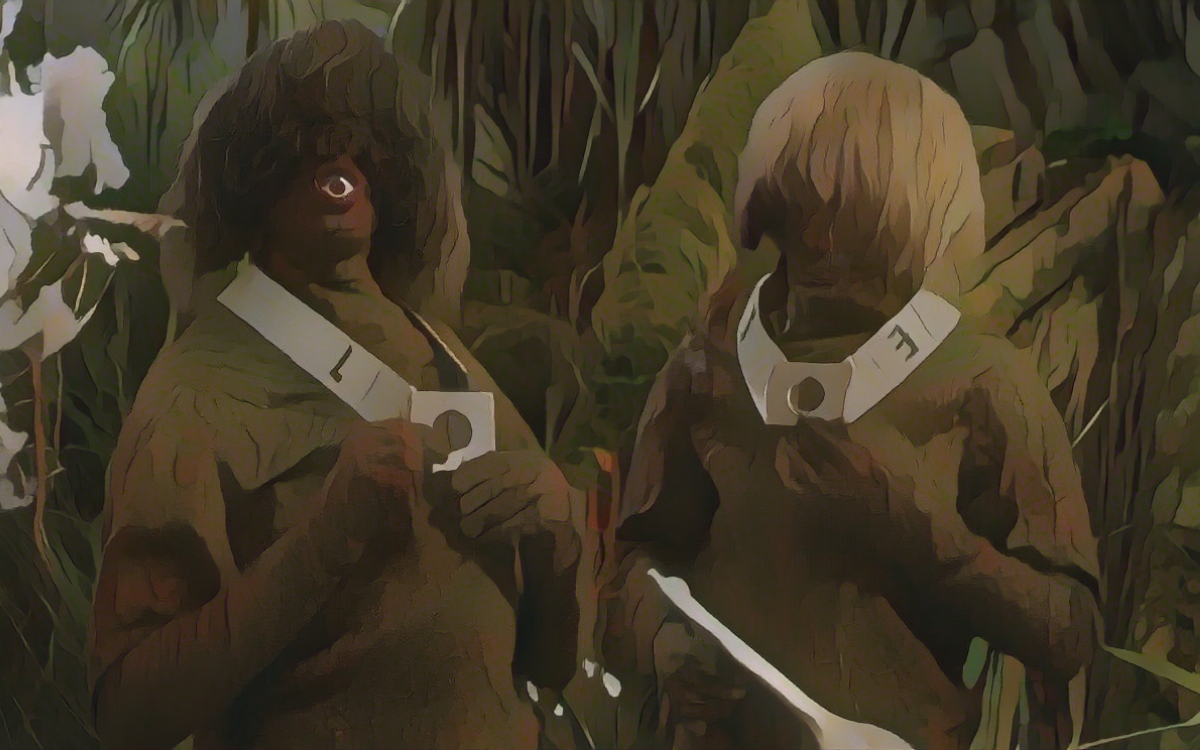
The TARDIS lands in a warm jungle with birds and an elephant, but the sky above is metal plates. The Doctor, Steven, and new friend Dodo step out to explore. Dodo has a cold and keeps sneezing. Guards with badges appear and arrest them. A silent, one-eyed alien called a Monoid watches and signals with its hands.
They are taken through galleries inside a vast spaceship, “the Ark.” Humans (called Guardians) say Earth was dying, so they launched this ship with people, plants, and animals to reach a new world named Refusis. The voyage takes hundreds of years. Crews wake in shifts to guide the ship. In a great hall workers carve a giant statue that will be finished by their distant descendants.
The Commander questions the strangers. The Doctor is respectful and helpful; Steven stays cautious; Dodo is friendly and curious. The Commander decides to treat them as guests, and a tour continues through control rooms and jungle decks. No one on the Ark has known illness for centuries.
Dodo sneezes again. A Guardian copies the sound and rubs his nose, puzzled. A Monoid sways, unsteady. The Doctor frowns and asks about medical records. As the doors close, the Commander clutches the rail and staggers. Something new and dangerous is spreading through the Ark.
Episode 2: The Plague
The cold Dodo brings to the Ark spreads fast. Guardians cough, Monoids sway, and the Commander collapses. Panic grows. Zentos blames the strangers for a deliberate plague and demands harsh punishment. The Doctor insists the illness is only an old Earth virus unknown to the Ark. He asks for time to help. A council forms, nervous and divided. They lock the travellers while a verdict is prepared.
Steven falls sick, proving the infection’s danger. The Doctor and the chief medic work in the laboratory. He studies blood samples and notices Dodo recovering. Her antibodies can lead to a cure. With simple equipment and the Ark’s records, he prepares a vaccine and a spray to treat the decks. Time runs out as the Commander drifts near death.
The Doctor proves his mixture on Steven, who begins to recover. The council allows a trial dose. The Commander revives. Relief spreads through the ship. Zentos admits he was wrong. Treatment is rushed to Guardians and Monoids across the decks, and the crisis eases.
Grateful, the crew forgive the travellers. The Doctor, Steven, and Dodo return to the TARDIS. They depart, thinking the Ark is now safe to continue its long journey to Refusis.
Episode 3: The Return
The TARDIS lands in the same jungle deck, but centuries have passed. The great statue is finished, and its head is a Monoid’s. The Doctor, Steven, and Dodo step out and are seized. Monoids now rule the Ark; humans are servants. The Monoids wear voice devices and give numbers as names. One is the leader. He orders the ship to complete its journey to Refusis and says the humans will be “controlled” there.
Zentos and the old council are long gone. Steven is put to work under guard. The Doctor and Dodo are taken to the control area, where One boasts that the plague years changed power: while humans were weak, the Monoids rose. The Doctor warns that conquest will bring trouble, but One plans to make Refusis a Monoid world and to decide the humans’ fate later.
The Ark reaches orbit. One sends a landing party to scout the surface. He forces the Doctor and Dodo to go with them as guides and hostages. Refusis looks empty: wide halls, heavy doors, no people. Then tables slide by themselves and a deep voice speaks from the air. The Refusians are invisible and strong. They welcome peaceful settlers, but warn they will not allow cruelty.
On the Ark, whispers spread among humans and lower-rank Monoids. On the planet, the Doctor listens to the unseen hosts and begins to shape a plan for peace, before the Monoid leader turns Refusis into a new tyranny.
Episode 4: The Bomb
The Refusians reveal themselves by moving heavy furniture and speaking from the air. They tell the Doctor and Dodo that Refusis is open to peaceful settlers only. The Monoid leader refuses and tries to seize buildings. His own ranks begin to argue about control and who should rule the Ark people. A split forms between the high-numbered guards and the leader’s close circle.
On the Ark in orbit, Steven learns a secret: the Monoids have hidden a bomb inside the great statue. If there is trouble on Refusis, they will destroy the ship and everyone on it. Steven organises the humans to stall for time and search the statue without alerting the guards.
Down on Refusis, the Doctor and Dodo use the Refusians’ strength and invisibility to turn the tables on the landing party. A Monoid craft explodes in the confusion, and news of the loss launches open fighting between Monoid factions on the Ark. Steven wins a brief ceasefire to save lives.
The Doctor returns and directs the final search. With Refusian help, they move the statue head and find the bomb. It is thrown clear before detonation. The threat ends. Shaken, Monoids and humans agree to share Refusis under Refusian guidance. The Doctor, Steven, and Dodo say goodbye and depart in the TARDIS.
Themes
Across all the episodes, the story swings for big ideas on a modest stage: a human–Monoid generation ship, a catastrophic cold passed on by Dodo, and a bold centuries-long time jump between its middle episodes.
It isn’t as exquisitely crafted as The Aztecs or as towering as The Daleks’ Master Plan, but its structure and moral ambition lift it above lighter fare like stretches of The Space Museum.
The invisible Refusians and the statue-with-a-nose payoff give it personality, even when the production shows its seams. On balance, it earns a solid mid-tier rating, nudging upper-mid for audacity within the Hartnell run.
Its threads link cleanly around it. Dodo’s sudden arrival at the end of The Massacre of St Bartholomew’s Eve settles into a new crew rhythm here, while the serial’s “return to the same place, far later” device prefigures later experiments with time and consequence, and even echoes faintly into the thematically kindred The Ark in Space.
The Doctor’s insistence on coexistence rather than conquest mirrors earlier lessons from The Aztecs, and the coda points the TARDIS straight toward the tonal swerve of The Celestial Toymaker, then onward to The Gunfighters. As a story, The Ark feels like a thoughtful hinge: a reminder that small causes can reshape futures, and that the series can make time itself the twist
.
This is a chapter from Craig Hill’s book “Doctor Who – The First Doctor”, chronicling every episode featuring the First Doctor. It is available on Amazon.
.
To view the list of other Doctor Who serials, please click this link
Doctor Who Episode Guides for Sale on Amazon
Step aboard the TARDIS and journey across the universe with every incarnation of The Doctor in this series of unofficial Doctor Who episode companions.
This collection of twelve books explores every televised adventure of the Time Lord’s lives.
Each volume in the series delves into a different Doctor’s era, offering detailed episode guides, behind-the-scenes insights, character profiles, and story synopses.
Once you have clicked the link, choose which book you want, and then whether you want to buy the Kindle (eBook) or Paperback versions.
Previews are available before you buy.

Visit the Australian Book and Language Studio
Discover more from Craig Hill
Subscribe to get the latest posts sent to your email.
 Craig Hill